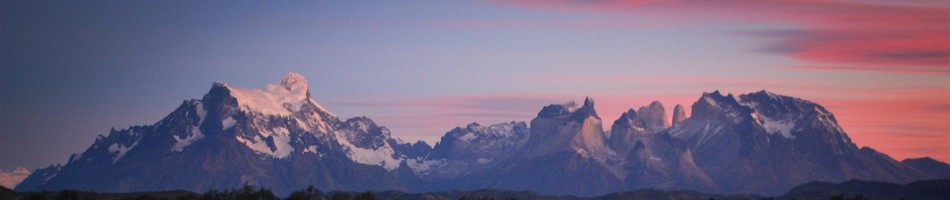
Til fots i fjellet (walking in the mountains)

“The real voyage of discovery consists not in seeking new landscapes, but in having new eyes.” ― Marcel Proust

Black Saturday! Record traffic jams!” – howls the radio towards escapees for the French Riviera and Spanish costas. I almost fall asleep cruisin’ behind the wheel on our 1100km ride to Larvik, Denmark’s ferry harbour for Sweden and Norway. Everyday Robots on endless repeat. Clichés reign. Scandinavia isn’t beach dwellers dada.
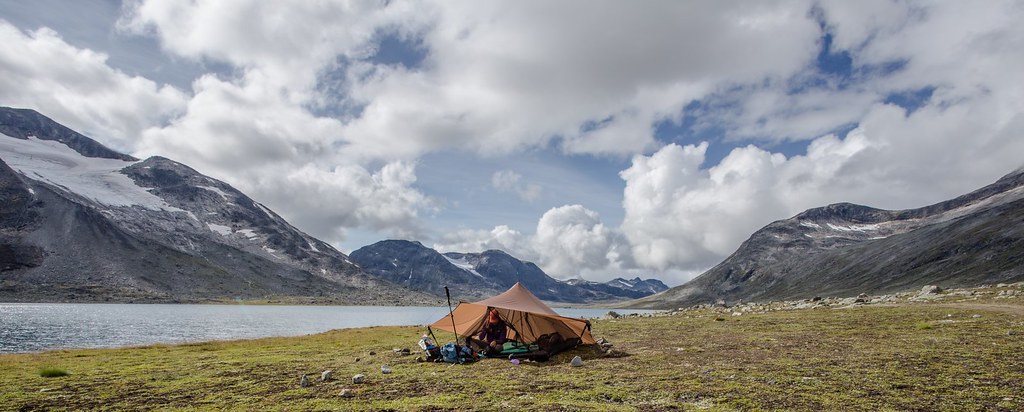
The mountains are calling and I must go (J. Muir). Bivaouc along Langvatnet. Jotunheimen NP. Norway.

The mountains are calling and I must go (J. Muir).
Bivaouc along Langvatnet.
Jotunheimen NP. Norway.

We had a great 4 week thru-hike loop prepared for arctic Norway and Sweden looping from Bodø (Norway) to Ammarnäs (Sweden) and back to Mosjøen (Norway) through some promising wild country. Personal loss wiped those plans of the table. Trip cancelled. Black summer.
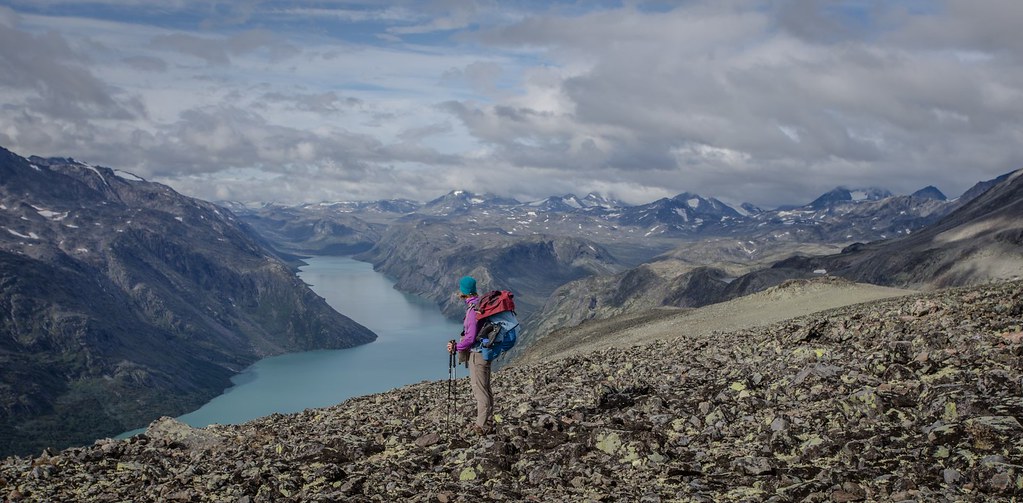
““When you feel life at crossroads, you need higher perspective view.” ― Toba Beta, My Ancestor Was an Ancient Astronaut

““When you feel life at crossroads, you need higher perspective view.” ― Toba Beta, My Ancestor Was an Ancient Astronaut

But as days and weeks passed by, we knew comfort would eventually steer us back into the mountains. We filled up the trunk with gear and food and travelled north. No plans. No maps. Zero expectations.
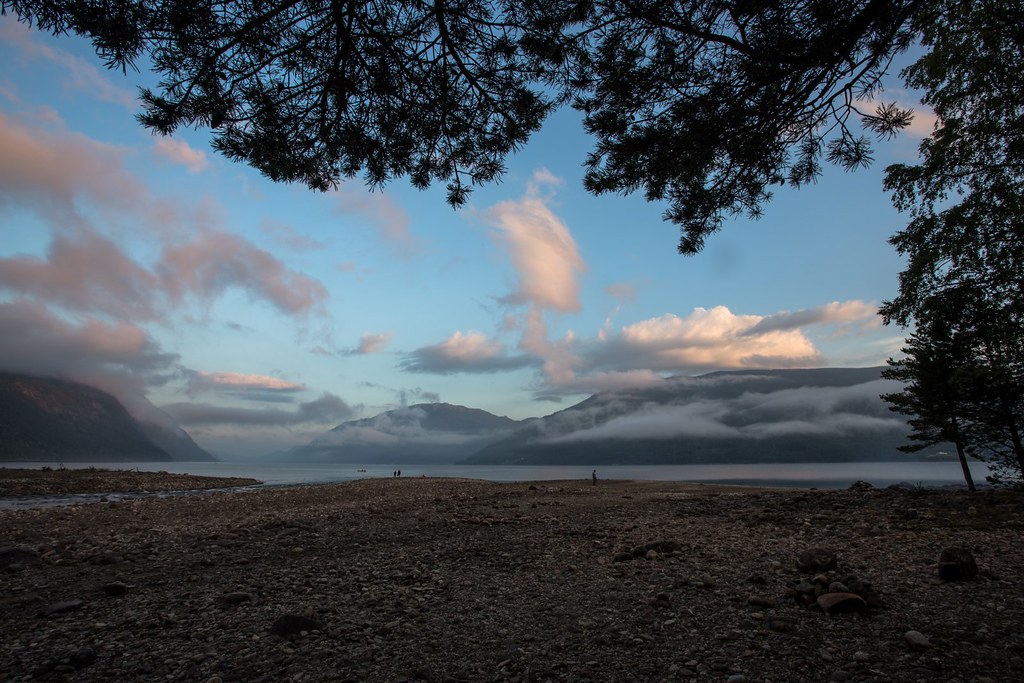
Tinnsjå (Tinnsjø, Lake Tinn) is one of the largest lakes in Norway, and one of the deepest (490m!) in Europe. Telemark county. Norway.

Tinnsjå (Tinnsjø, Lake Tinn) is one of the largest lakes in Norway, and one of the deepest (490m!) in Europe. Telemark county. Norway.

We knew southern Norway possesses limitless oportunities for spectacular mountain hiking and harbours accesible worldclass fjords. We soon enjoyed Scandinvian’s mild 2k14 summer . Eat. Sleep. Hike. A hassle free metronome.

The no plan trick was a revelation. Not surprisingly our camera was filled with happy memories from backpacking hikes in Hardangervidda, Sunnmøre , Reinheimen, Rondane and Jotunheimen.

“The future depends on what you do today.” Damn right Gandhi!

For those with 5 minutes to waste, we would like to invite you to hit play on our holiday video.
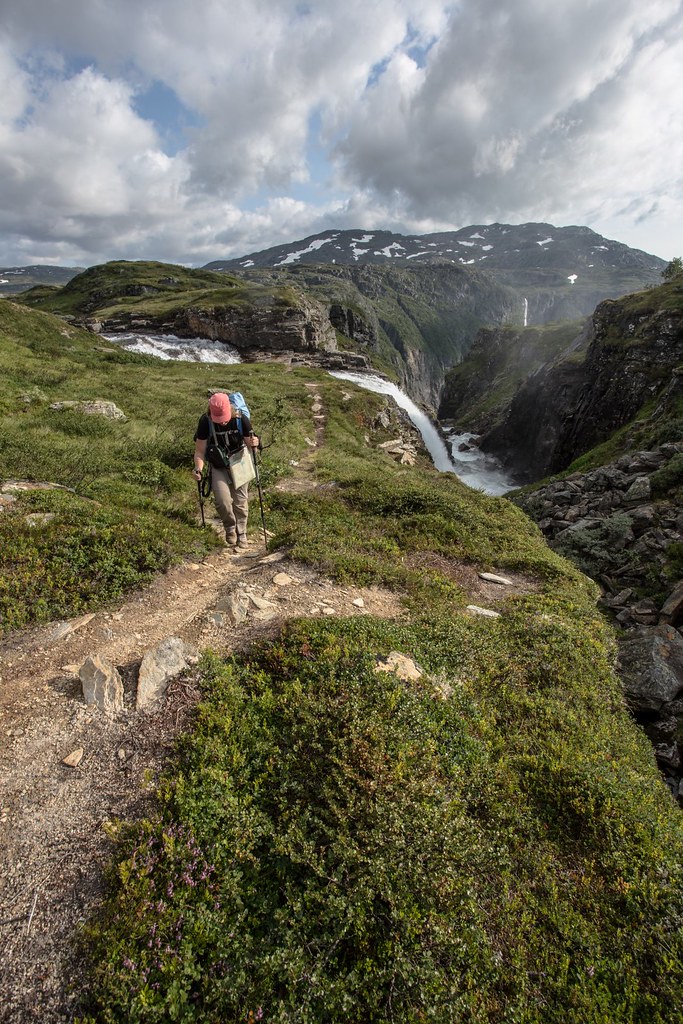
After a 800m climb up from the Hardangerfjord at sea level we finally arrive on the plateau. Hardangervidda NP. Norway.
After a 800m climb up from the Hardangerfjord at sea level we finally arrive on the plateau.
 
Hardangervidda NP. Norway.

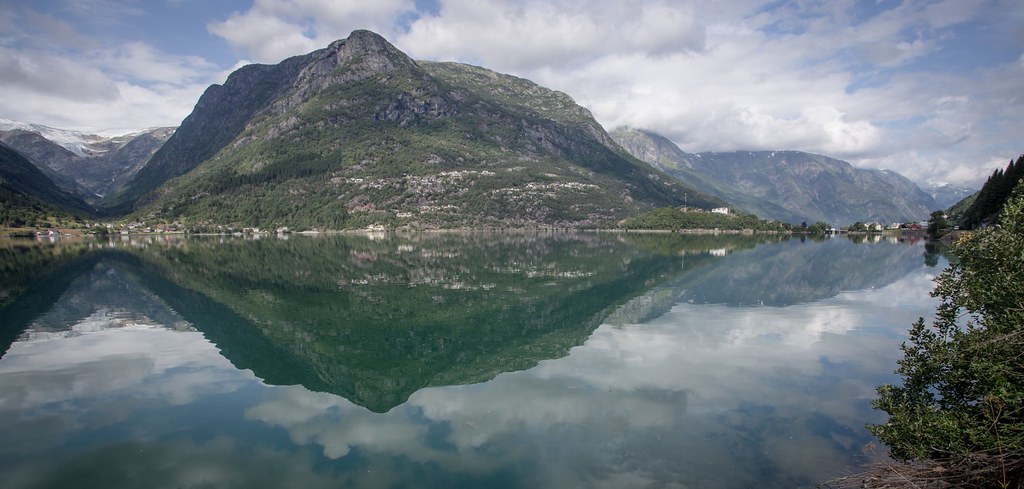
The Hardangerfjord is the third longest fjord in the world, and the second longest fjord in Norway. The fjord stretches 179 kilometres (111 mi) from the Atlantic Ocean into the mountainous interior of Norway along the Hardangervidda plateau. The innermost point of the fjord reaches the town of Odda. The glaciers from the Folgefonna National Park almost drop into sea here.
The Hardangerfjord is the third longest fjord in the world, and the second longest fjord in Norway. The fjord stretches 179 kilometres (111 mi) from the Atlantic Ocean into the mountainous interior of Norway along the Hardangervidda plateau. The innermost point of the fjord reaches the town of Odda.
 
The glaciers from the Folgefonna National Park almost drop into sea here.

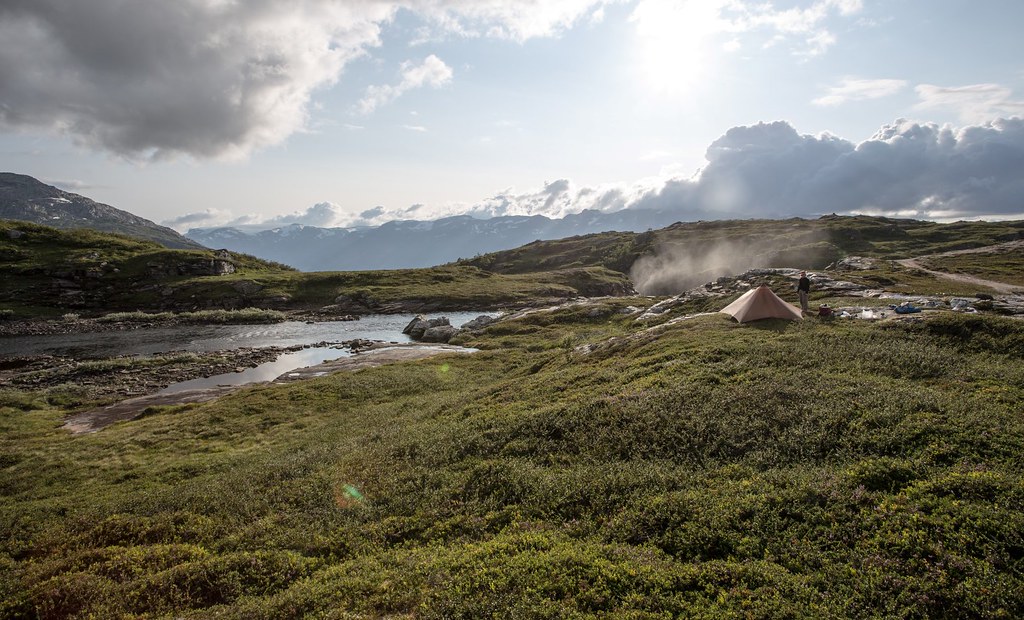
Bivaouc on the edge of the Hardangervidda plateau, high above the Hardanger fjord. The plateau is the largest peneplain (eroded plain) in Europe, covering an area of about 6,500 km2 (2,500 sq mi) at an average elevation of 1,100 m (3,500 ft).
Bivaouc on the edge of the Hardangervidda plateau, high above the Hardanger fjord. The plateau is the largest peneplain (eroded plain) in Europe, covering an area of about 6,500 km2 (2,500 sq mi) at an average elevation of 1,100 m (3,500 ft).

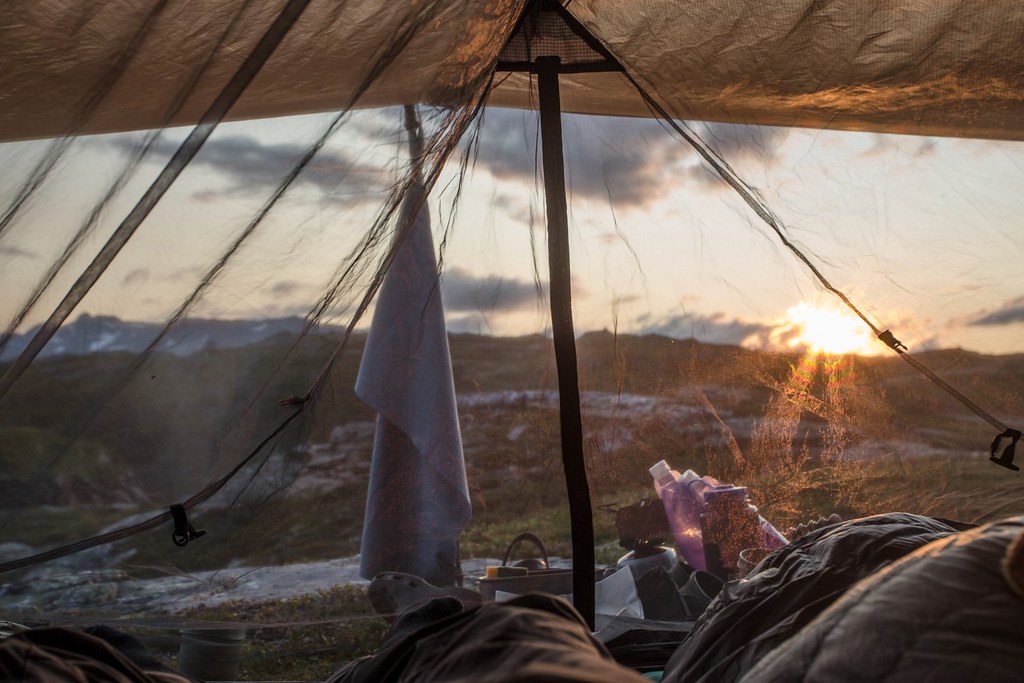
Inhaling the day's last rays of light. The Oooknest from our faded MSR Twing Tarp perfectly fits under the MLD Trailstar (with some minor adaptions). Contrary to the expected we met little flying critters. Hardangervidda NP. Norway.
Inhaling the day’s last rays of light. The Oooknest from our faded MSR Twing Tarp perfectly fits under the MLD Trailstar (with some minor adaptions). Contrary to the expected we met little flying critters.
 
Hardangervidda NP. Norway.

The varying climate of the plateau has a marked effect on the flora, which is richer on the wetter west side than in the drier east; much of the plateau is covered by coarse grasses, mosses (especially sphagnum) and lichens. Hardangervidda NP.
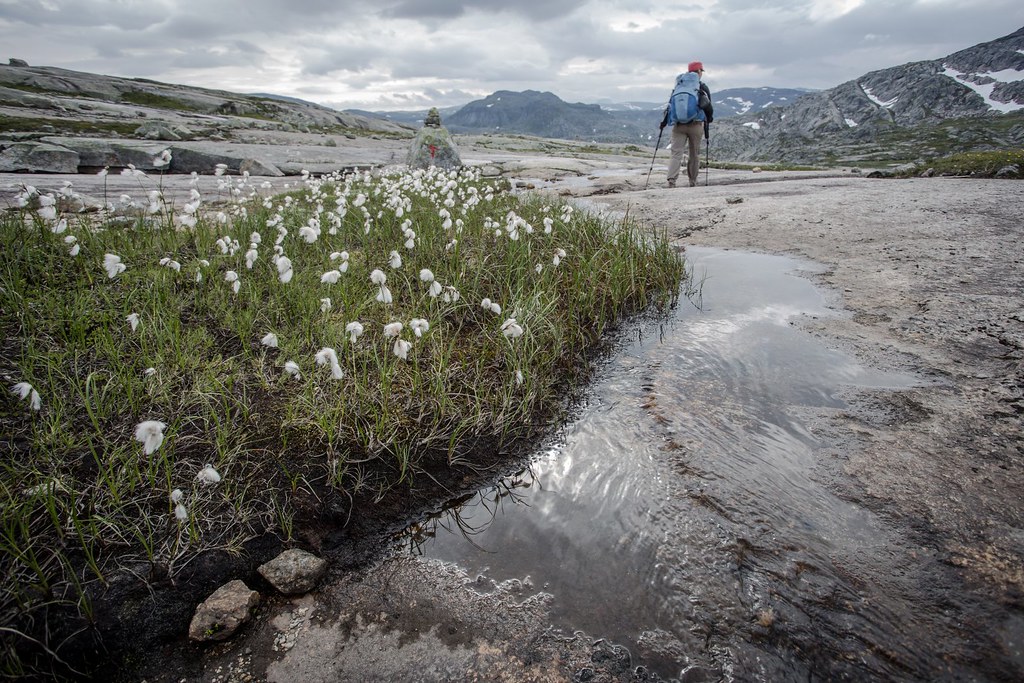
The varying climate of the plateau has a marked effect on the flora, which is richer on the wetter west side than in the drier east; much of the plateau is covered by coarse grasses, mosses (especially sphagnum) and lichens.
 
Hardangervidda NP.

The landscape of the Hardangervidda is characterised by barren, treeless moorland interrupted by numerous pools, lakes, rivers and streams. Hardangervidda NP. Norway.
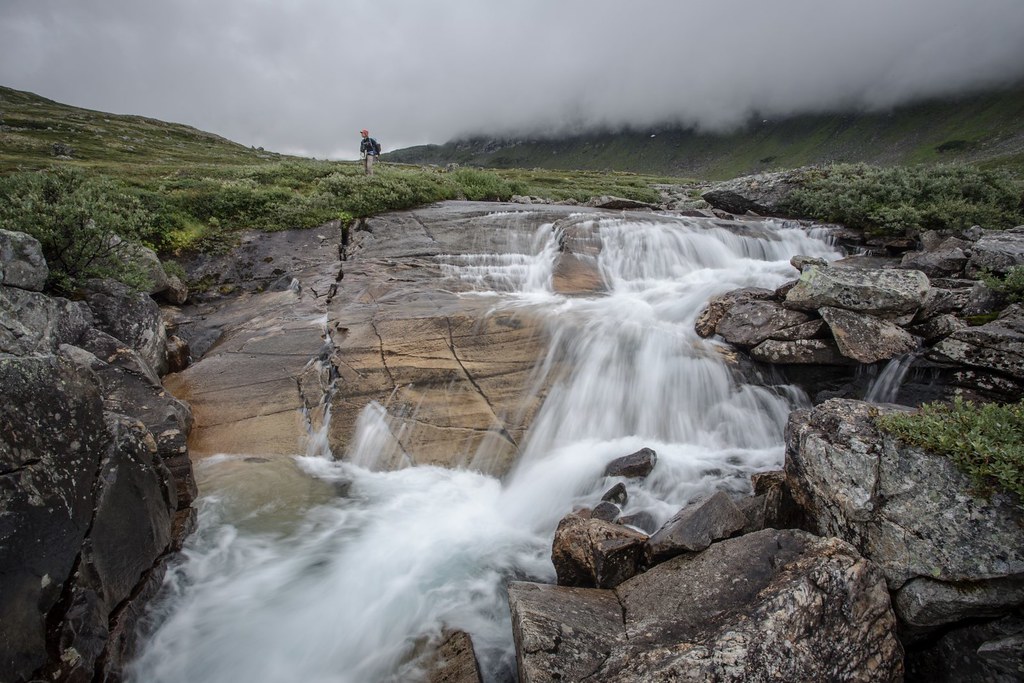
The landscape of the Hardangervidda is characterised by barren, treeless moorland interrupted by numerous pools, lakes, rivers and streams.
 
Hardangervidda NP. Norway.

Hardangervidda National Park, at 3,422 square kilometers, is Norway's largest national park. It has the southernmost stock of several arctic animals and plants. Its wild reindeer herds are among the largest in the world. We didn't met any. Probably something to do with the fact I should keep quiet a bit more often...

Hardangervidda National Park, at 3,422 square kilometers, is Norway’s largest national park. It has the southernmost stock of several arctic animals and plants. Its wild reindeer herds are among the largest in the world. We didn’t met any. Probably something to do with the fact I should keep quiet a bit more often…
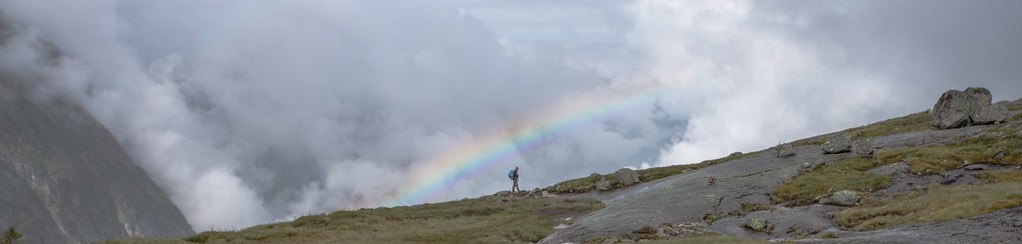
“You'll never find a rainbow if you're looking down”  ― Charles Chaplin

“You’ll never find a rainbow if you’re looking down”
― Charles Chaplin
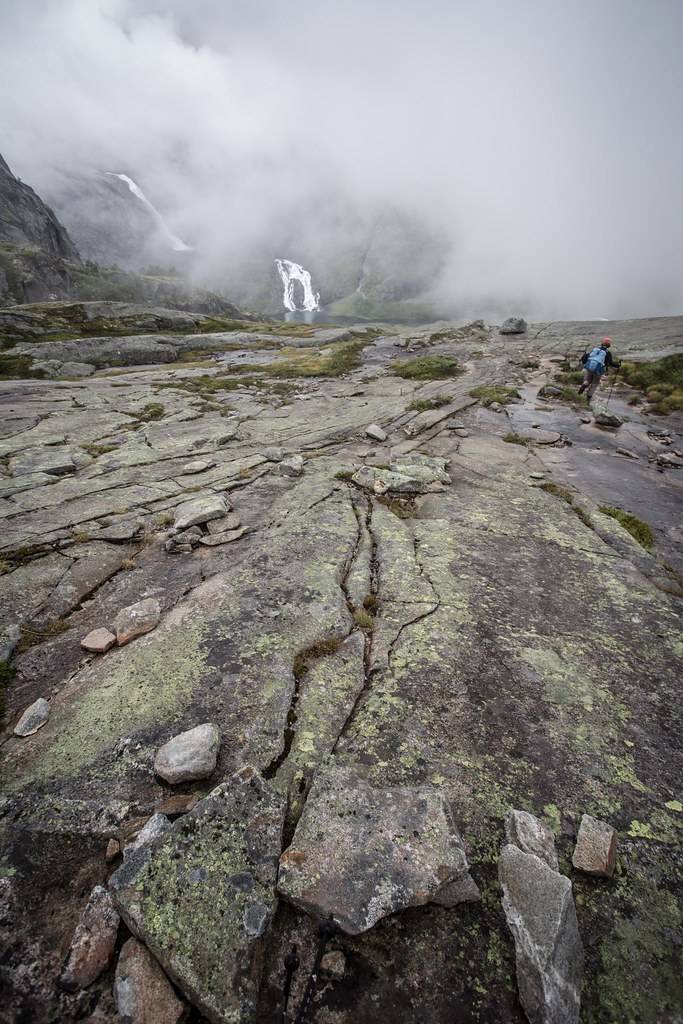
Walk. Slip. Stand. Try to walk again. Coccyx and slippery slab. No friends. Hardangervidda NP.
Walk. Slip. Stand. Try to walk again. Coccyx and slippery slab. No friends. Hardangervidda NP.

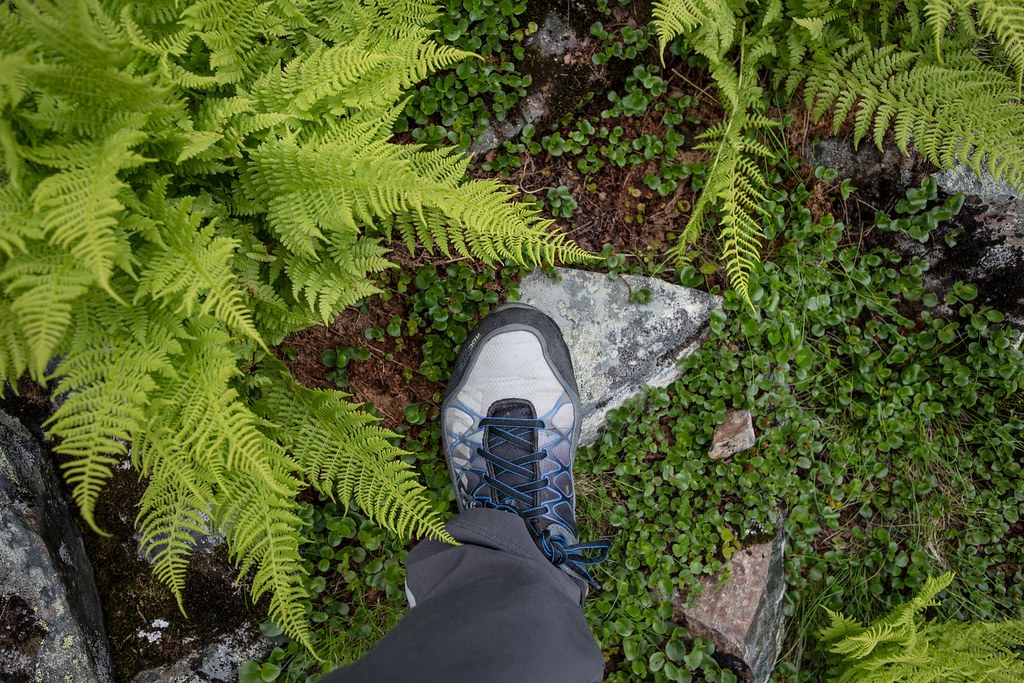
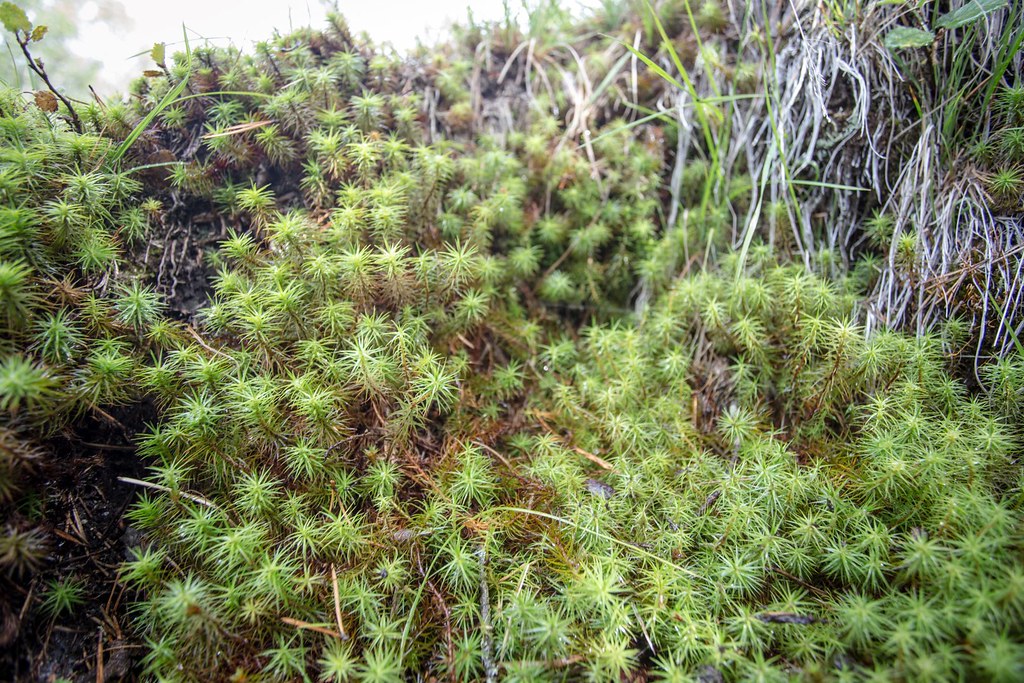
How can you resist the enchantingly microforrest around your toes. Hardangervidda NP. Norway.
How can you resist the enchantingly microforrest around your toes. Hardangervidda NP. Norway.

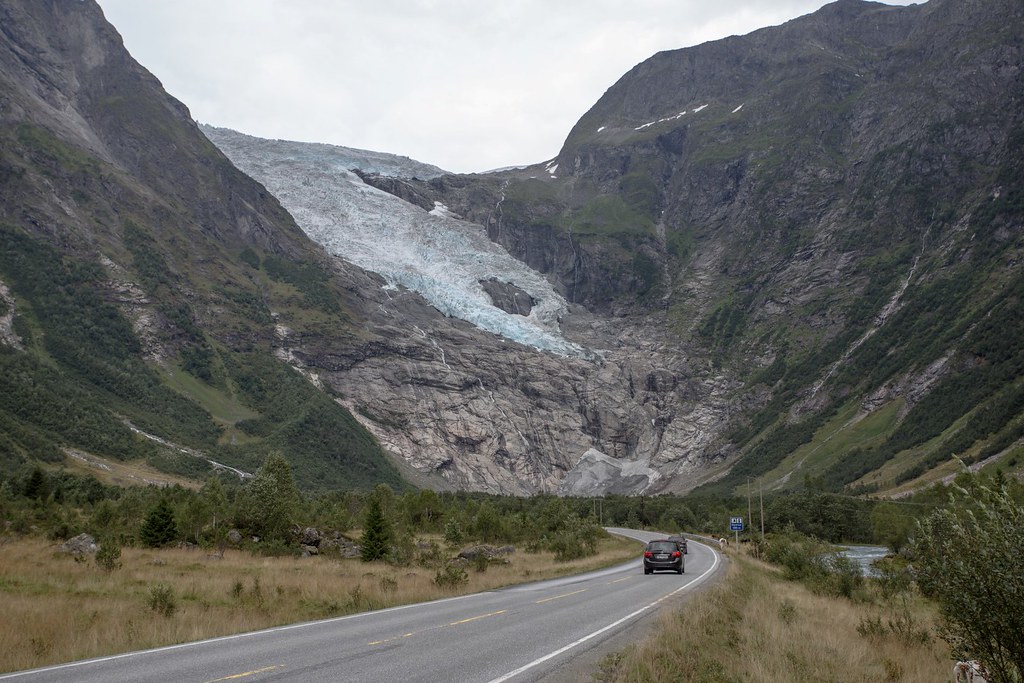
Jostedalsbreen is the largest glacier in continental Europe. It is situated in Sogn og Fjordane county in Western Norway. You can drive through it! Try it now before rock takes over blue ice.

Jostedalsbreen is the largest glacier in continental Europe. It is situated in Sogn og Fjordane county in Western Norway. You can drive through it! Try it now before rock takes over blue ice.

Branches of the Jostedalsbreen glacier reach down into the valleys. The glacier is maintained by the high snowfall rates in the region, not the cold temperatures. This means the glacier has high melting rates in its snouts. The Jostedalsbreen has around 50 glacier arms such as the pictured Briksdalsbreen near Olden.
Branches of the Jostedalsbreen glacier reach down into the valleys. The glacier is maintained by the high snowfall rates in the region, not the cold temperatures. This means the glacier has high melting rates in its snouts. The Jostedalsbreen has around 50 glacier arms such as the pictured Briksdalsbreen near Olden.

Awaiting friendly weahter in the comfy Patchellhytta. Sunnmøre Alps. Ålesund-Sunnmøre Turistforening.
Awaiting friendly weahter in the comfy Patchellhytta. Sunnmøre Alps. Ålesund-Sunnmøre Turistforening.

Sunnmøre is the southern part of the county “Møre og Romsdal” near the Art Nouveau sea harbour of Ålesund on the west coast. of Norway  It has numerous dramatic steep mountains fringing the fjords. These starkly beautiful region is often overlook by foreing mountain dwellers.
Sunnmøre is the southern part of the county “Møre og Romsdal” near the Art Nouveau sea harbour of Ålesund on the west coast. of Norway It has numerous dramatic steep mountains fringing the fjords. These starkly beautiful region is often overlook by foreing mountain dwellers.

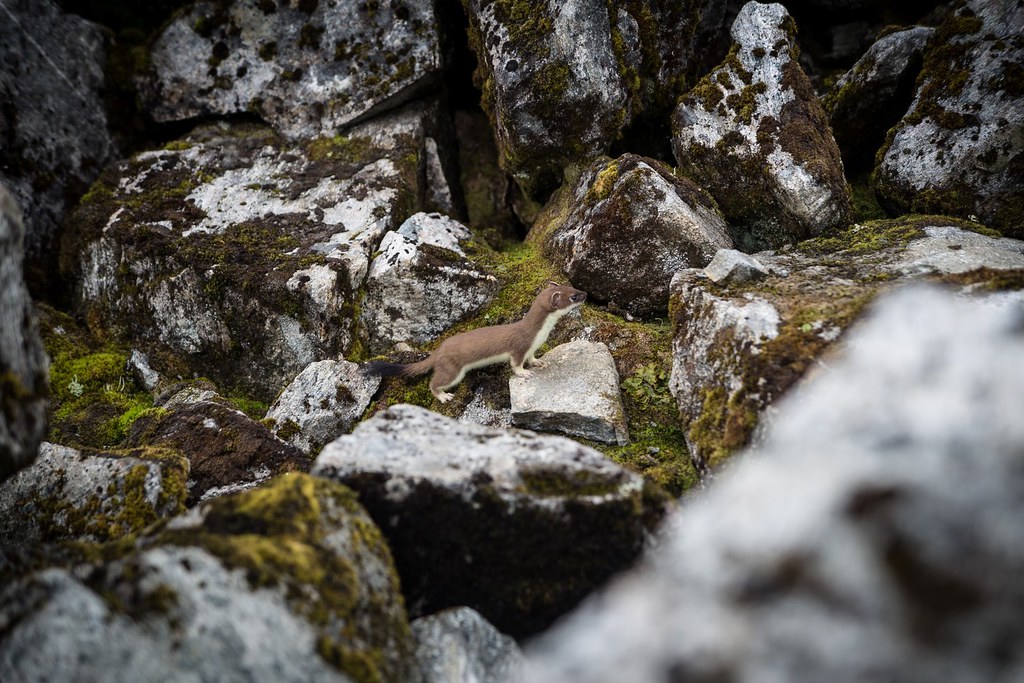
The curious case of the short-tailed weasel running in franzy over rock and fjell. On average, males measure 187–325 mm (7.4–12.8 in) in body length, while females measure 170–270 mm (6.7–10.6 in). To encounter a weasel when setting out for a journey was considered bad luck, but one could avert this by greeting the stoat as a neighbour, which I gladly did. A couple of hours later we climbed on the summit of Slogen, once desribed as the one of the proudest mountains in Europe.
The curious case of the short-tailed weasel running in franzy over rock and fjell. On average, males measure 187–325 mm (7.4–12.8 in) in body length, while females measure 170–270 mm (6.7–10.6 in). To encounter a weasel when setting out for a journey was considered bad luck, but one could avert this by greeting the stoat as a neighbour, which I gladly did. A couple of hours later we climbed on the summit of Slogen, once desribed as the one of the proudest mountains in Europe.

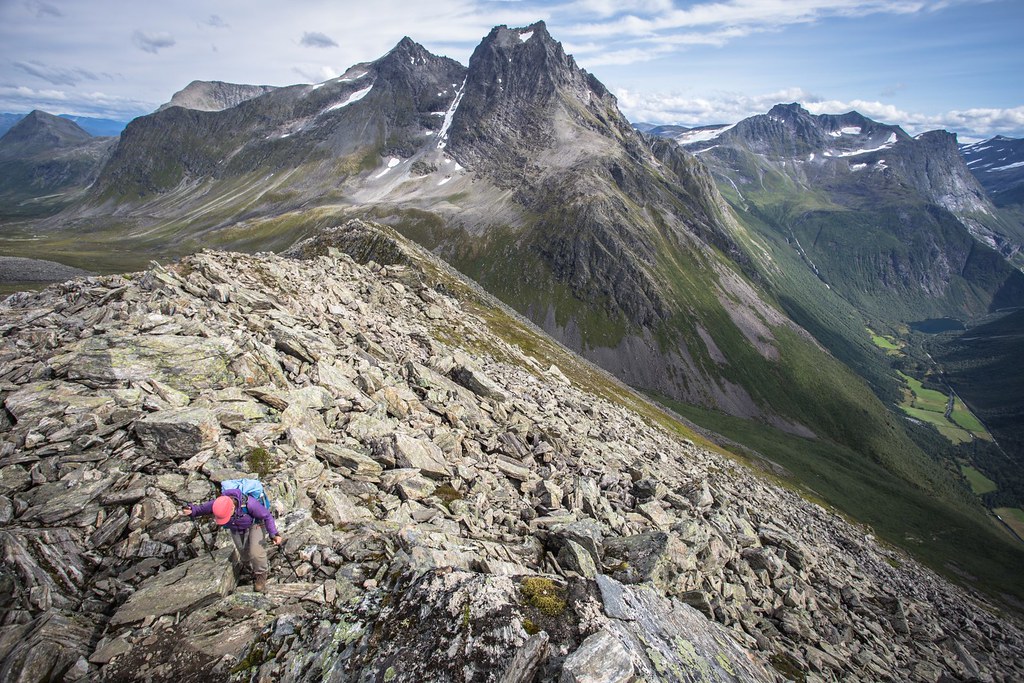
Slogen is a mountain rising up from Hjørundfjorden. Even though it is not among the highest peaks in Norway, the 1,564-metre (5,131 ft) tall mountain is rated among the top ten mountain walks in Norway. This is largely due to its beauty, view, and the fact that it's rising directly from the fjord. Sunnmøre Alps. Norway.

Slogen is a mountain rising up from Hjørundfjorden. Even though it is not among the highest peaks in Norway, the 1,564-metre (5,131 ft) tall mountain is rated among the top ten mountain walks in Norway. This is largely due to its beauty, view, and the fact that it’s rising directly from the fjord. Sunnmøre Alps. Norway.
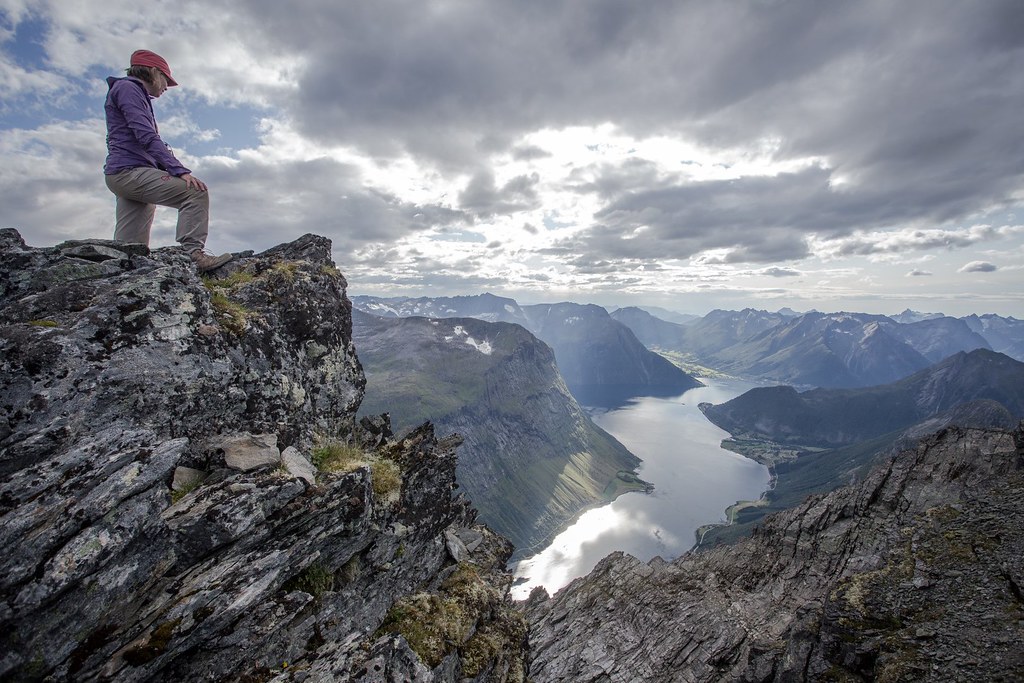
Peering one vertical mile down into  Hjørundfjorden from the summit of 1,564-metre (5,131 ft) tall Slogen. A thrilling sight!

Peering one vertical mile down into Hjørundfjorden from the summit of 1,564-metre (5,131 ft) tall Slogen. A thrilling sight!
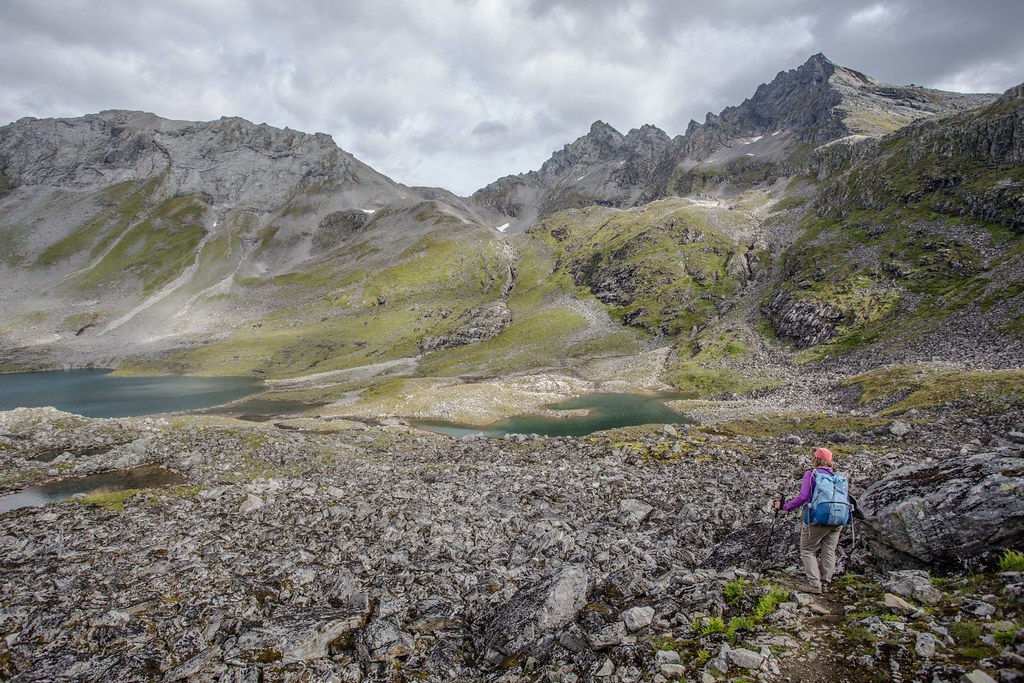
Isvatnet and Storevatnet lakes in the Langeseter valley with the pyramid Brekketinden summit rising above. Sunnmøre Alps. Norway.
Isvatnet and Storevatnet lakes in the Langeseter valley with the pyramid Brekketinden summit rising above. Sunnmøre Alps. Norway.

Au soleil, sous la pluie, à midi ou à minuit il y a tout ce que vous voulez aux Champs-Élysées.
Au soleil, sous la pluie,
à midi ou à minuit
il y a tout ce que vous voulez
aux Champs-Élysées.

Climb towards the alpine crossing between Gullmorebreen and Gullmoredalsvatnet. Sunnmøre Alps. Norway.
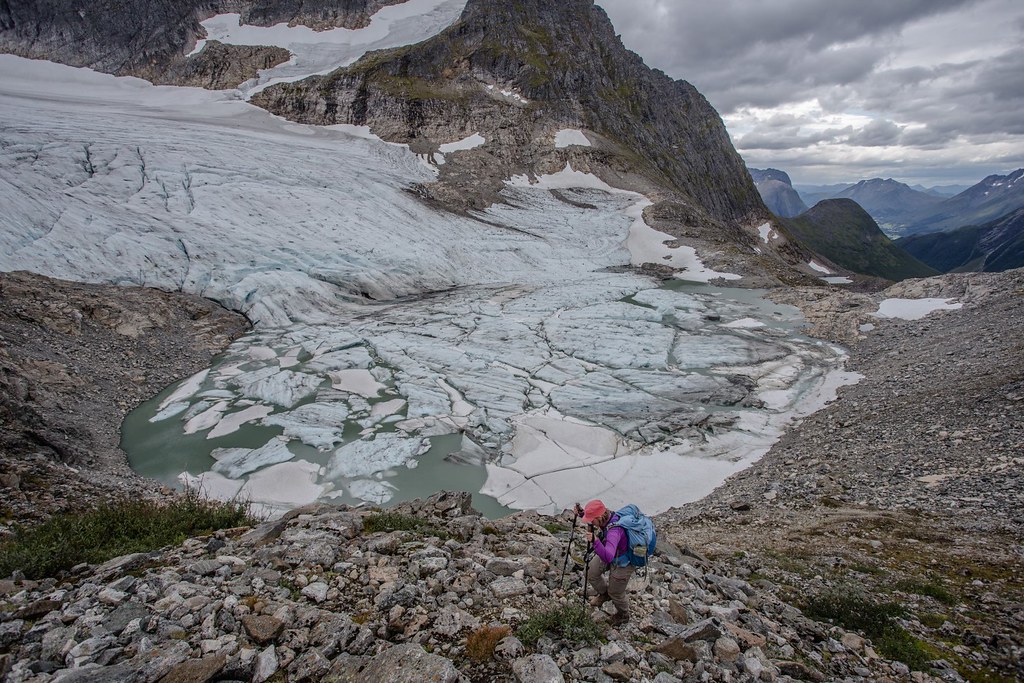
Climb towards the alpine crossing between Gullmorebreen and Gullmoredalsvatnet. Sunnmøre Alps. Norway.

Bypassing the Gullmorbreen glacier right underneath Brekketindane (1578m). Sunnmøre Alps. Norway.
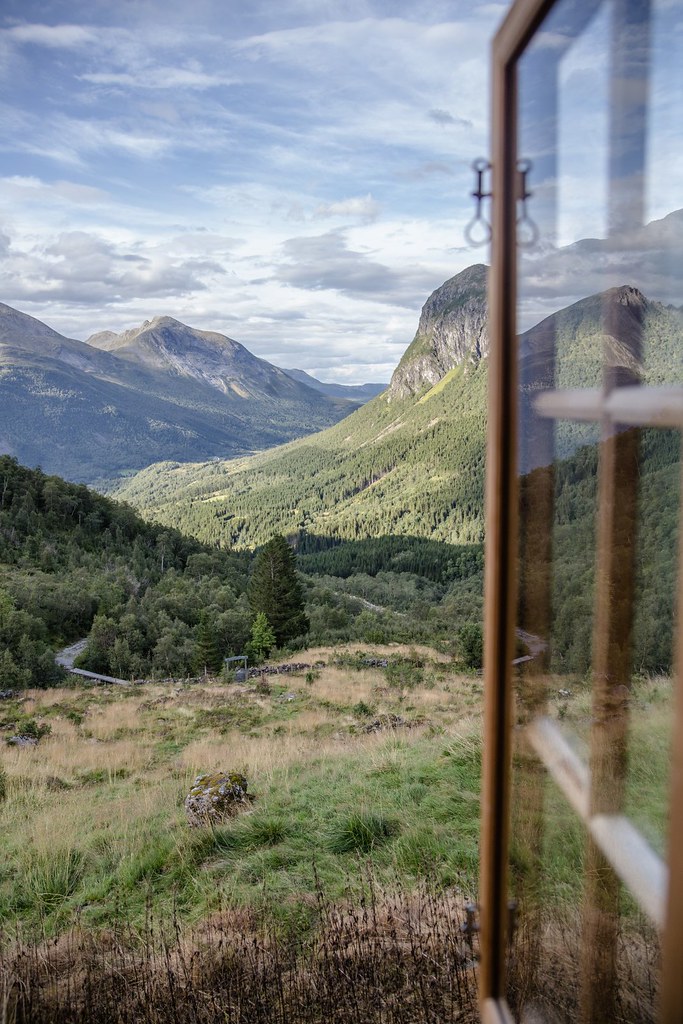
Bypassing the Gullmorbreen glacier right underneath Brekketindane (1578m). Sunnmøre Alps. Norway.

By this way we sincerely want to thank the Ålesund-Sunnmøre Turistforening for building and maintaining the Velleseter hytte. Probably the cosiest hytte in Southern Norway. Takk!
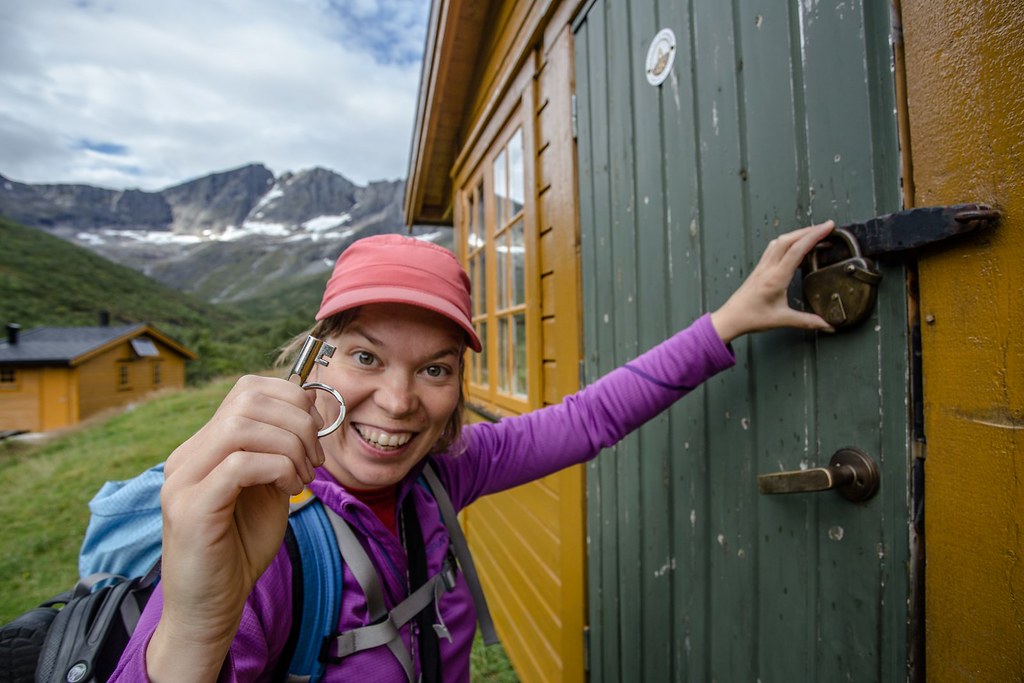
By this way we sincerely want to thank the Ålesund-Sunnmøre Turistforening for building and maintaining the Velleseter hytte. Probably the cosiest hytte in Southern Norway. Takk!

Happy backpacker with a key! Velleseter hytte. Sunnmøre Alps.
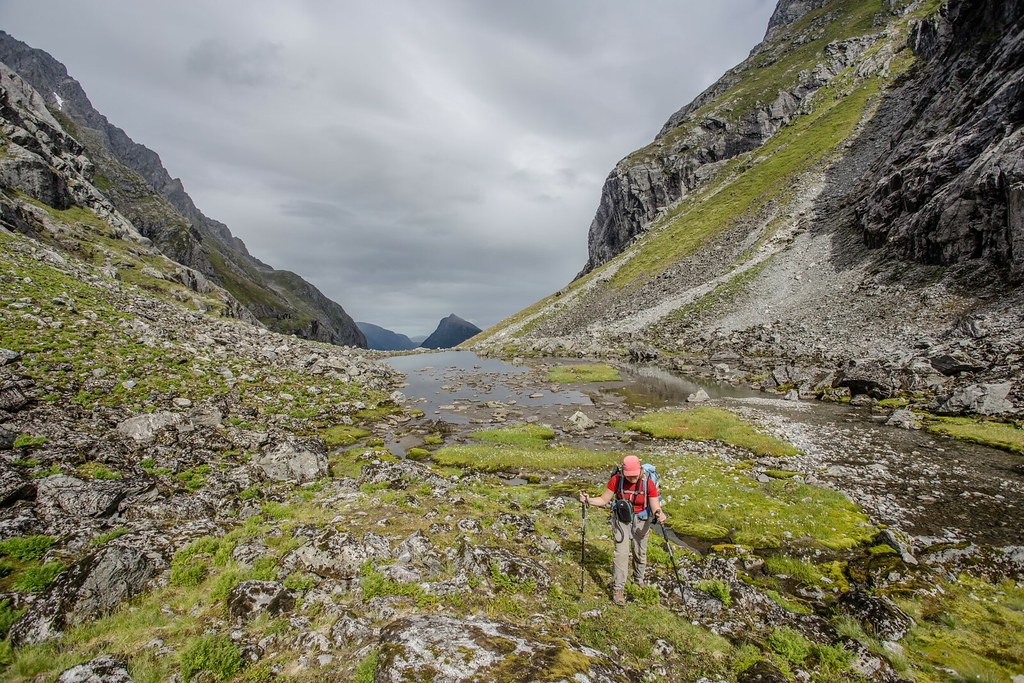
Happy backpacker with a key! Velleseter hytte. Sunnmøre Alps.

Crossing into Liadalen under a ray of sun. Sunnmøre Alps.
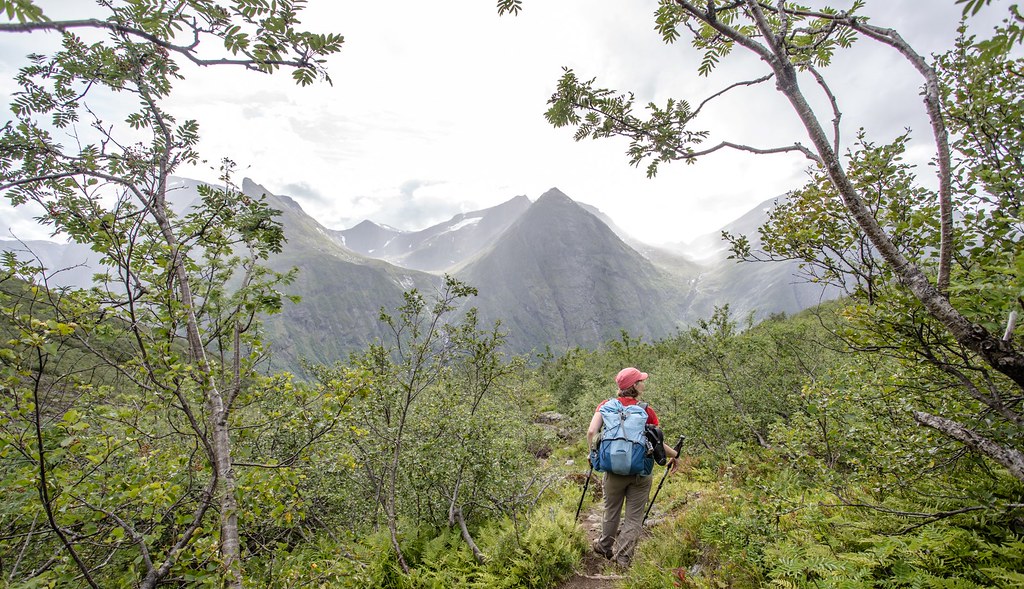
Crossing into Liadalen under a ray of sun. Sunnmøre Alps.

Ready for the 800m steep dive into the Norangsdalen. Sunnmøre Alps.
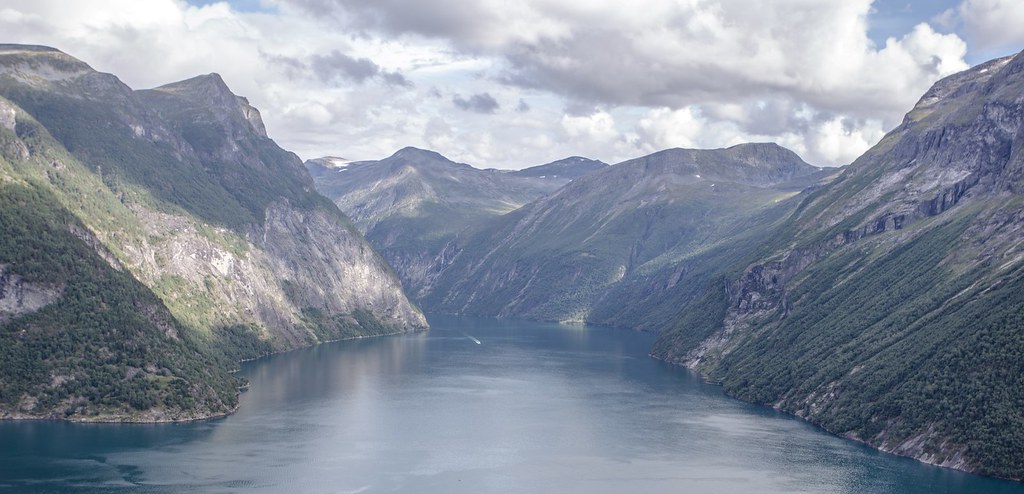
Ready for the 800m steep dive into the Norangsdalen. Sunnmøre Alps.

Geirangerfjord. A UNESCO World Heritage site. This fjord is surrounded by the steepest and, one is almost tempted to say, the most preposterous mountains on the entire west coast. It is very narrow and has no habitable shore area, for the precipitous heights rise in sheer and rugged strata almost straight out of the water. Foaming waterfalls plunge into the fjord from jagged peaks. Møre og Romsdal county, Norway.

Geirangerfjord. A UNESCO World Heritage site. This fjord is surrounded by the steepest and, one is almost tempted to say, the most preposterous mountains on the entire west coast. It is very narrow and has no habitable shore area, for the precipitous heights rise in sheer and rugged strata almost straight out of the water. Foaming waterfalls plunge into the fjord from jagged peaks. Møre og Romsdal county, Norway.

The Troll Wall (Trollveggen) is the tallest vertical rock face in Europe, about 1,100 metres (3,600 ft) from its base to the summit of its highest point. At its steepest, the summit ridge overhangs the base of the wall by nearly 50 metres (160 ft). The Troll Wall has been a prestigious goal for climbers and base jumpers alike. Carl Boenish, the “father” of base jumping, was killed on the Troll Wall in 1984 shortly after setting the world record for the highest base jump in history. Base jumping from Troll Wall has been illegal since 1986, altough there are still illegal jumps almost every day. Basejumping. Nah. Let’s fish.
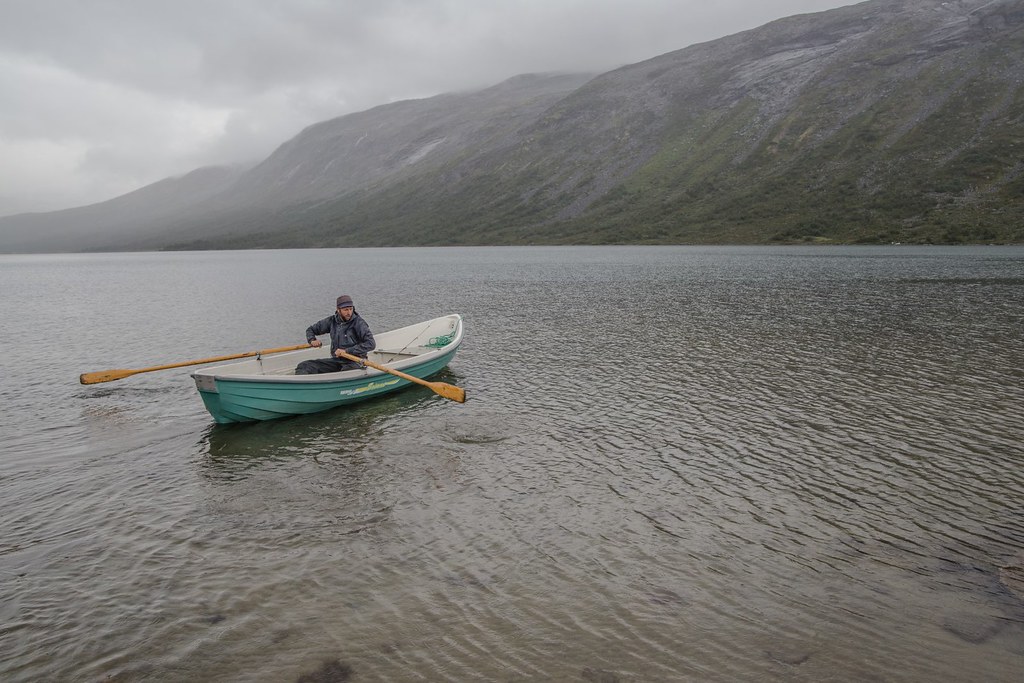
Gone for fishing on a fresh summer evening. Ulvådalsvatnet lake. Tafjordfjellene. Reinheimen National Park. Oppland. Norway.

Gone for fishing on a fresh summer evening.. Ulvådalsvatnet lake. Tafjordfjellene. Reinheimen National Park. Oppland. Norway.
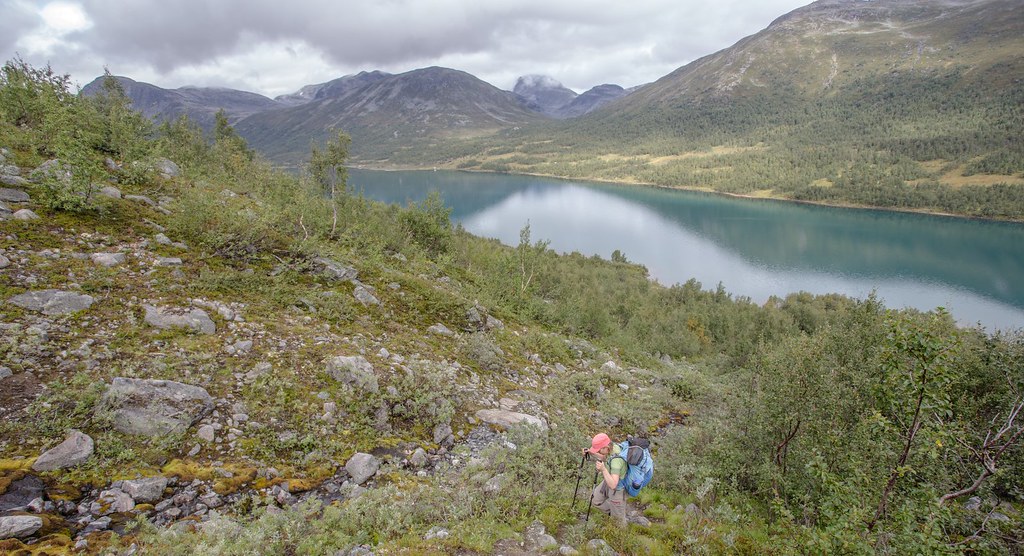
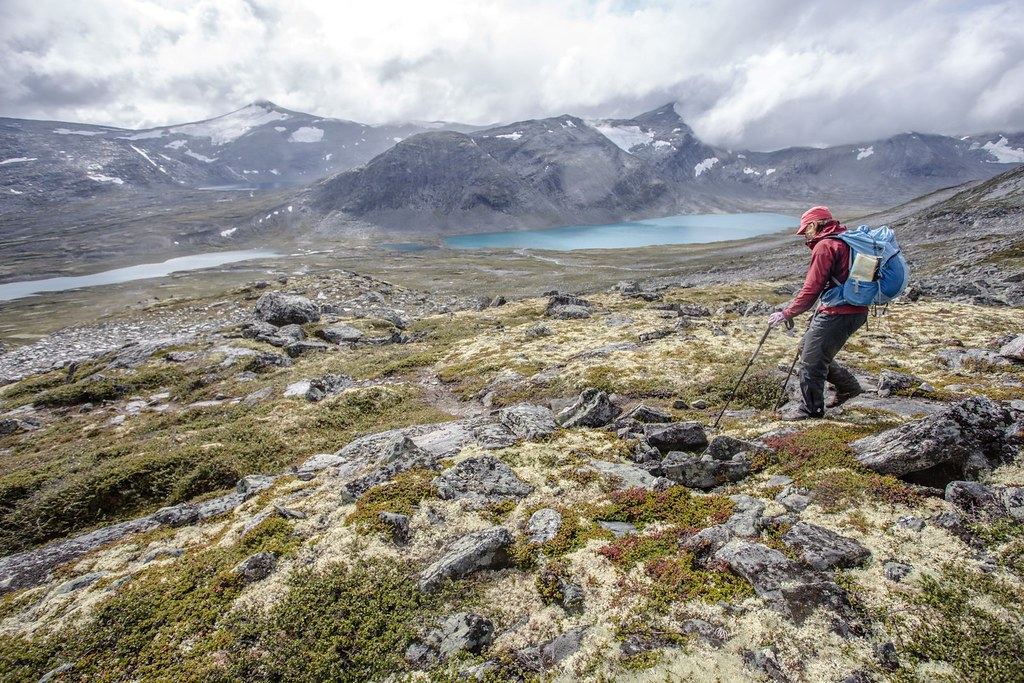
Hiking up to Hogtunga leaving Ulvådalsvatnet lake behind. Tafjordfjellene. Reinheimen National Park. Oppland. Norway.
Hiking up to Hogtunga leaving Ulvådalsvatnet lake behind. Tafjordfjellene. Reinheimen National Park. Oppland. Norway.

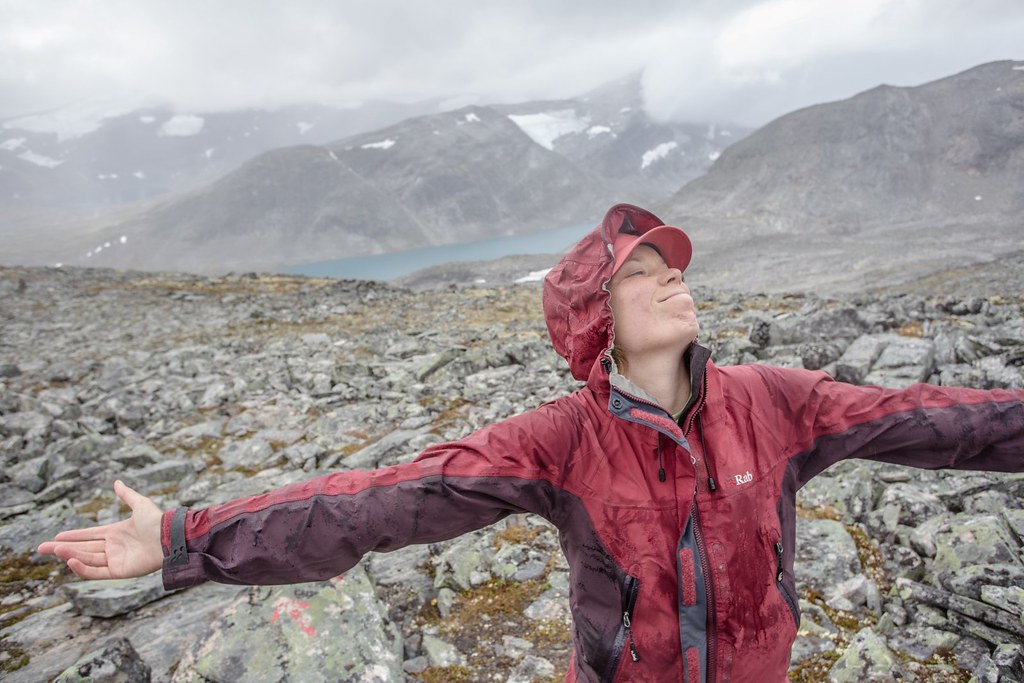
Rain on me! Enjoying prime summer weather in the Norwegian mountains. Tafjordfjellene. Reinheimen National Park. Oppland. Norway.
Rain on me! Enjoying prime summer weather in the Norwegian mountains. Tafjordfjellene. Reinheimen National Park. Oppland. Norway.

Incredible sollitude in the Tafjordfjellene mountains of Reinheimen National Park. Oppland. Norway.
Incredible sollitude in the Tafjordfjellene mountains of Reinheimen National Park. Oppland. Norway.

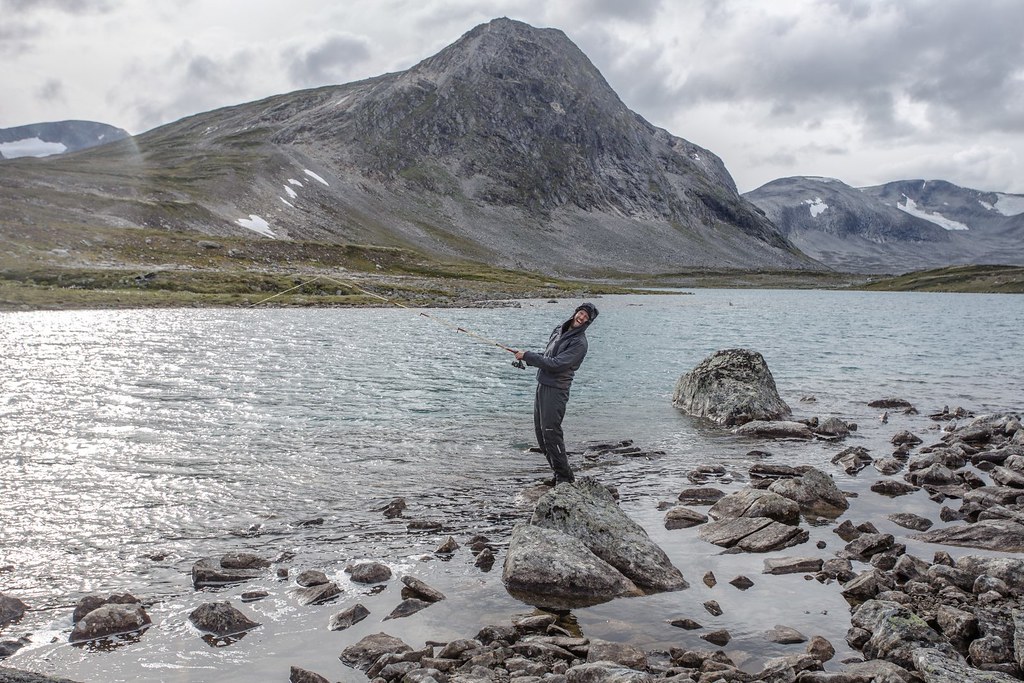
Who needs the fish? Nodre Botvatnet. Tafjordfjellene. Reinheimen National Park. Oppland. Norway.
Who needs the fish? Nodre Botvatnet. Tafjordfjellene. Reinheimen National Park. Oppland. Norway.

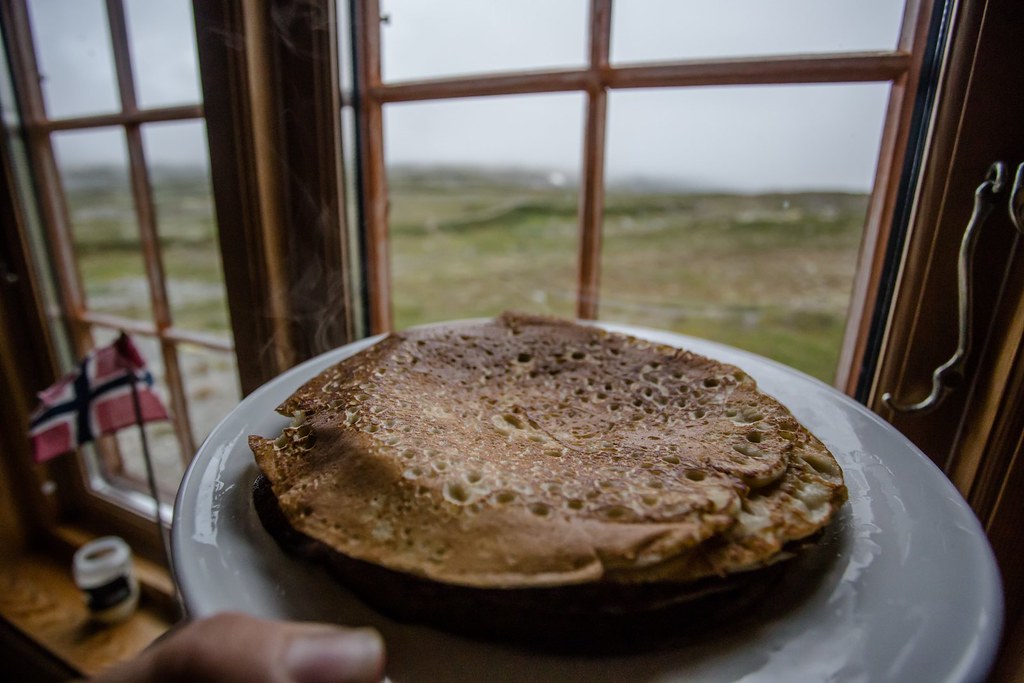
If there ain't no fish to bite then let them pancakes taste. Pyttbua. Tafjordfjellene. Reinheimen National Park. Oppland. Norway.
If there ain’t no fish to bite then let them pancakes taste. Pyttbua. Tafjordfjellene.
 
Reinheimen National Park. Oppland. Norway.

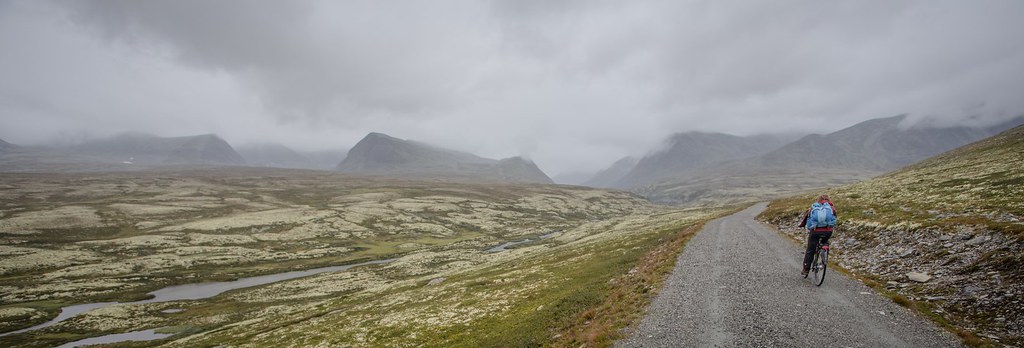
Real nice biking into Rondane NP on a rainy day. Hedmark and Oppland, Norway
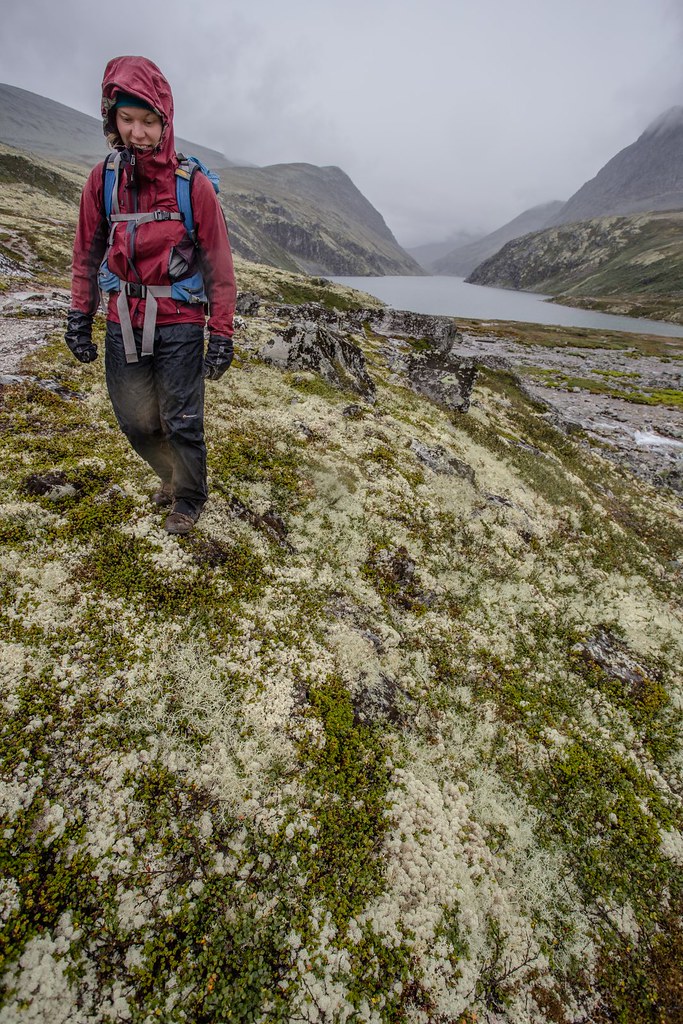
Real nice biking into Rondane NP on a rainy day. Hedmark and Oppland, Norway

Rondane is a typical high mountain area, with large plateaus and a total of ten peaks above 2,000 m (6,560 ft). The highest point is Rondeslottet (“The Rondane Castle”) at an altitude of 2,178 m (7,146 ft). The lowest point is just below the tree line, which is approximately 1,000 to 1,100 m (about 3,300 to 3,600 ft) above sea level. The climate is mild but relatively arid.
Mountain arteries. Rondane NP. Norway.
Mountain arteries. Rondane NP. Norway.

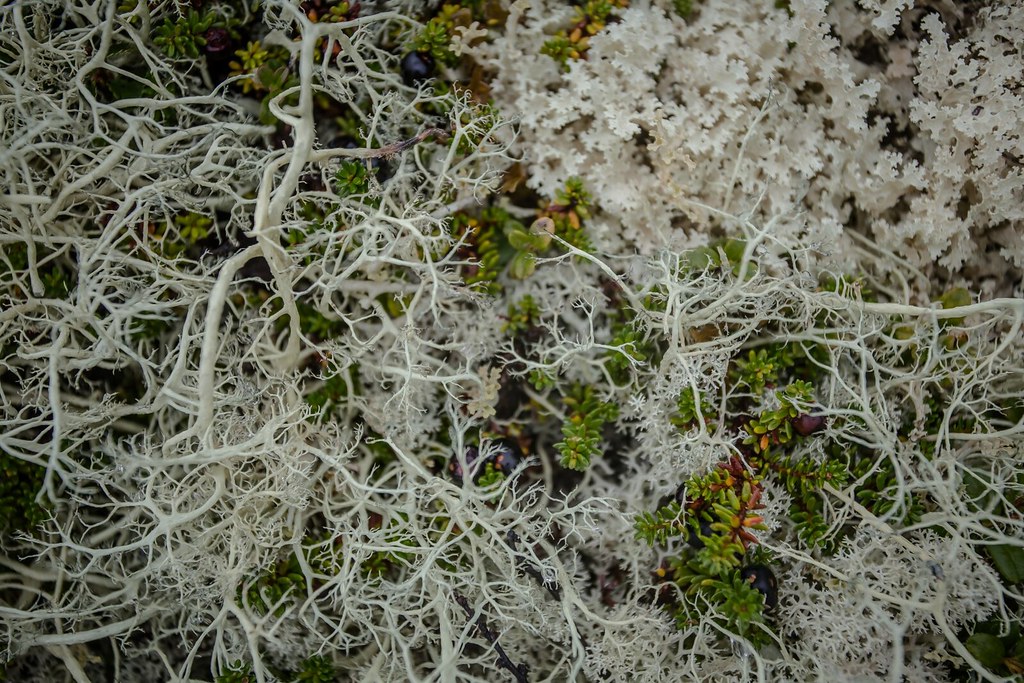
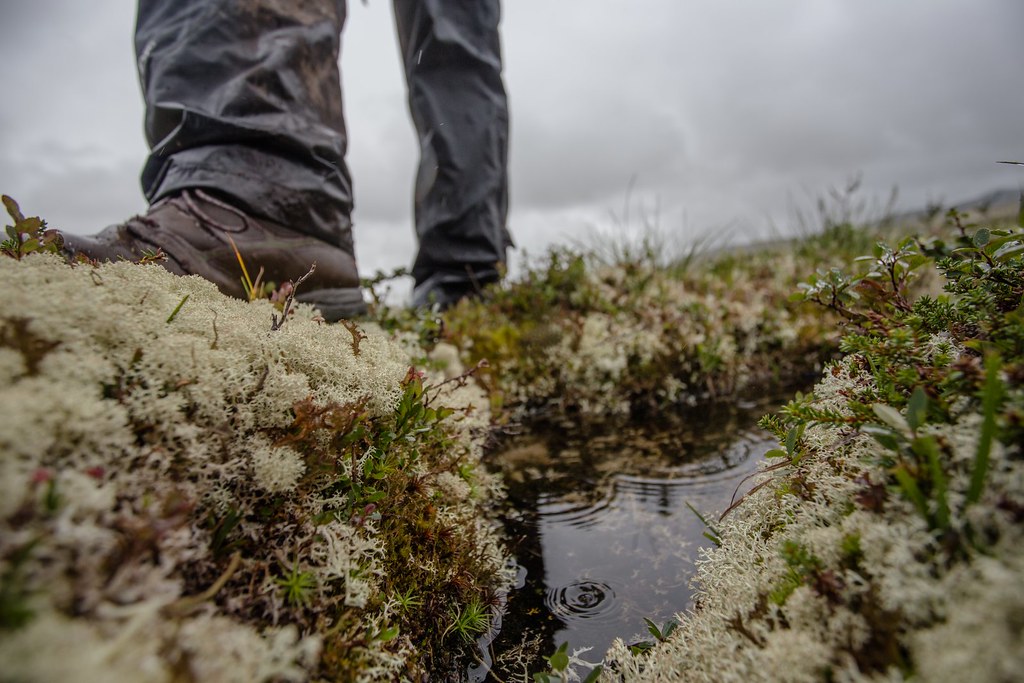
Apart from the White Birch trees of the lower areas, the soil and rocks are covered by heather and lichen, since they lack nutrients. Rondane NP. Norway.
Apart from the White Birch trees of the lower areas, the soil and rocks are covered by heather and lichen, since they lack nutrients.
 
Rondane NP. Norway.

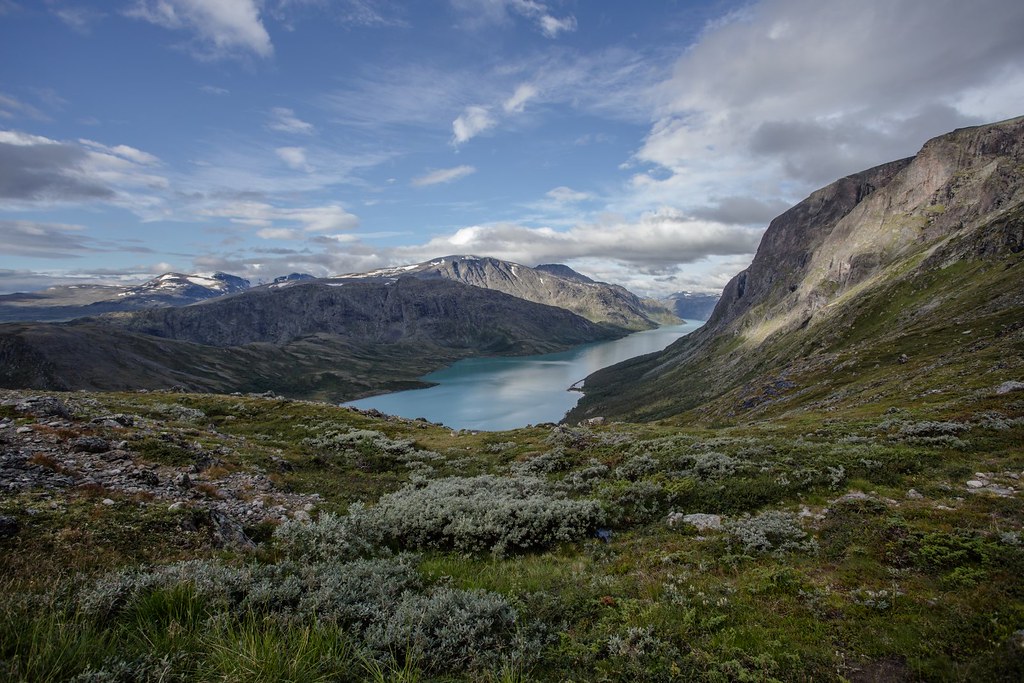
Morning view on Gjende lake. Jotunheimen (English: The Home of the Giants) is a mountainous area of roughly 3,500 km²  in southern Norway and is part of the long range known as the Scandinavian Mountains. The 29 highest mountains in Norway are all in Jotunheimen, including the very highest - Galdhøpiggen (2469 m).

Morning view on Gjende lake. Jotunheimen (English: The Home of the Giants) is a mountainous area of roughly 3,500 km² in southern Norway and is part of the long range known as the Scandinavian Mountains. The 29 highest mountains in Norway are all in Jotunheimen, including the very highest – Galdhøpiggen (2469 m).
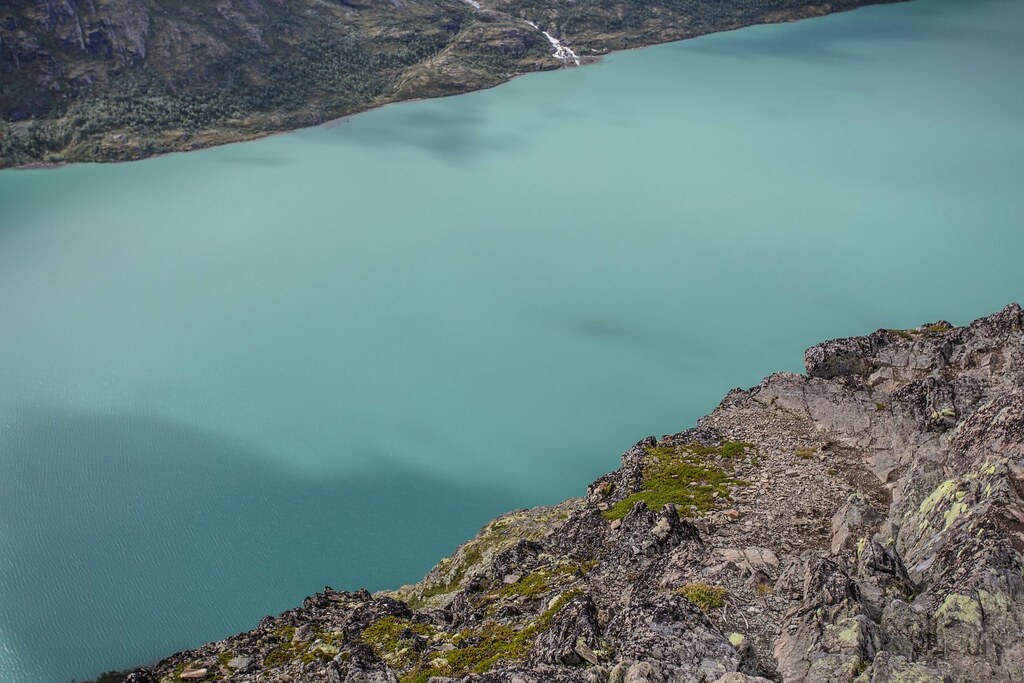
“The purest and most thoughtful minds are those which love color the most.”  ― John Ruskin, The Stones of Venice

“The purest and most thoughtful minds are those which love color the most.”
― John Ruskin, The Stones of Venice
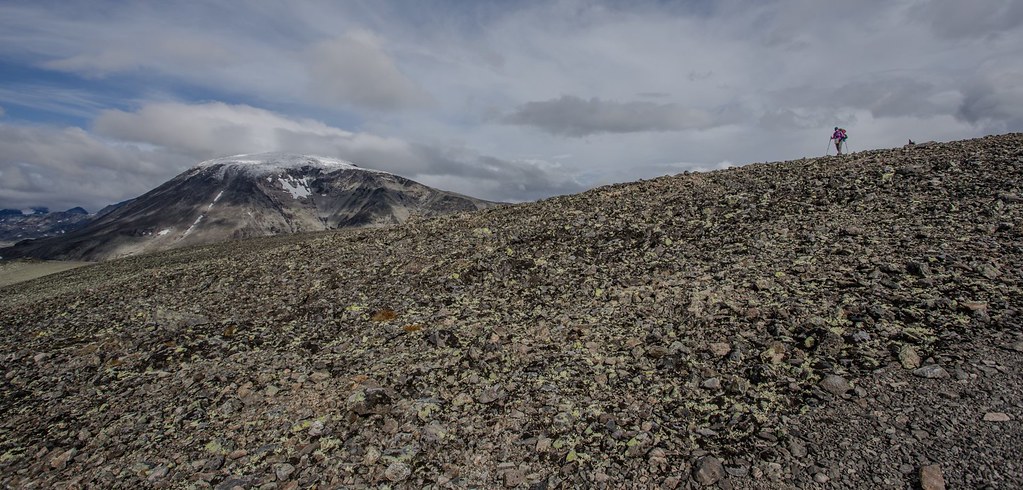
Jotunheimen contains Jotunheimen National Park, which was established in 1980 and covers an area of 1,151 km². Jotunheimen is very popular with hikers and climbers, and the Norwegian Mountain Touring Association maintains a number of mountain lodges in the area, as well as marked trails that run between the lodges and others that run up to some of the peaks.
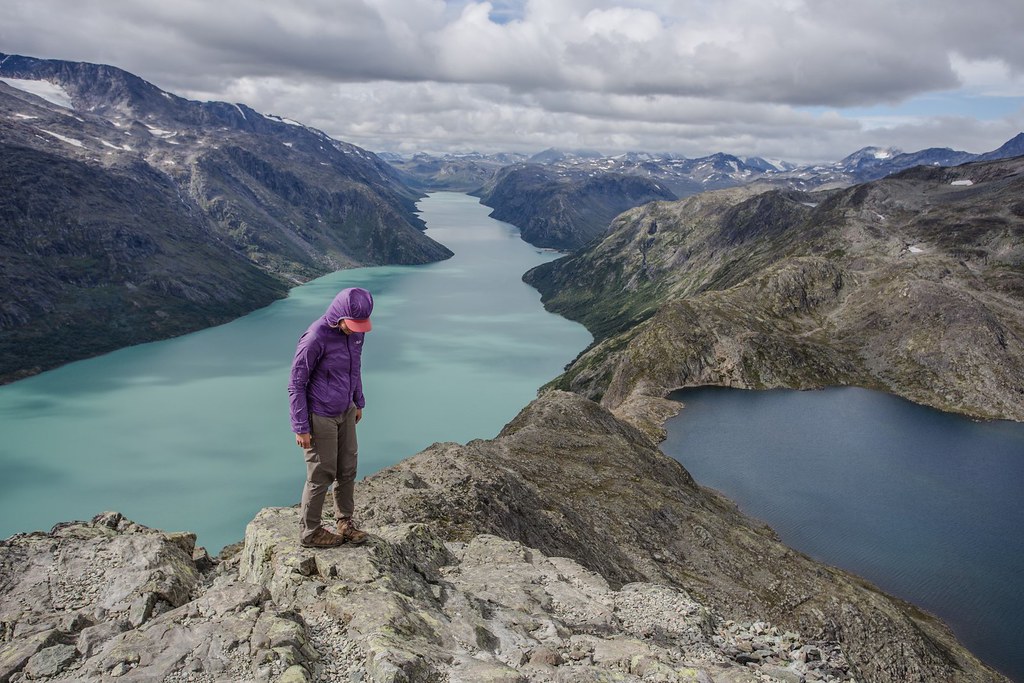
Jotunheimen contains Jotunheimen National Park, which was established in 1980 and covers an area of 1,151 km². Jotunheimen is very popular with hikers and climbers, and the Norwegian Mountain Touring Association maintains a number of mountain lodges in the area, as well as marked trails that run between the lodges and others that run up to some of the peaks.

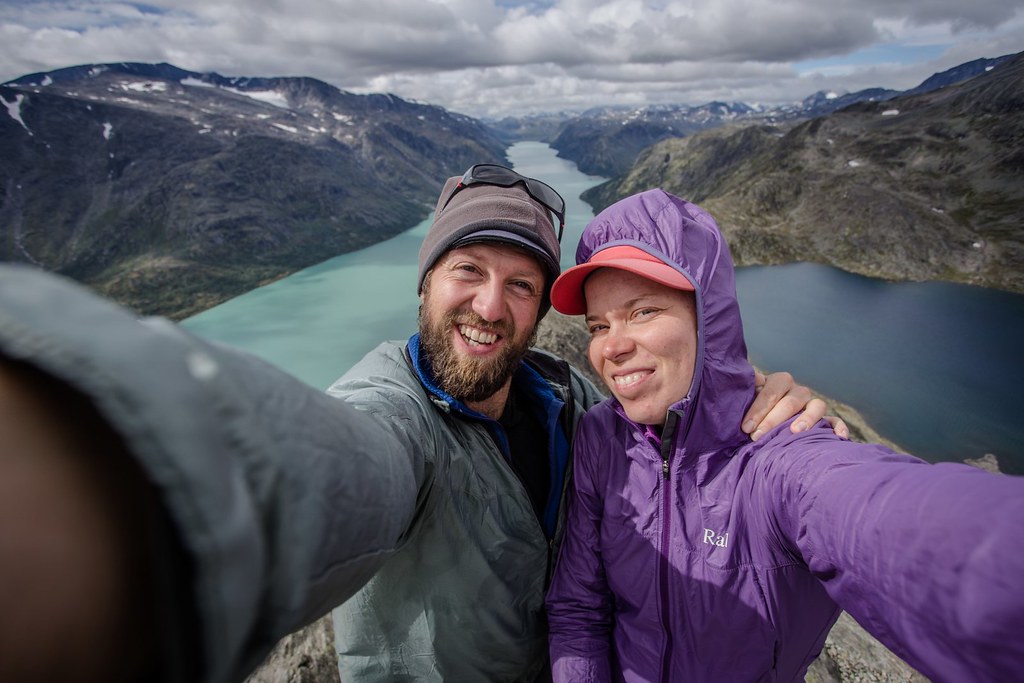
The walk over Besseggen ridge  is one of the most popular mountain hikes in Norway. About 30,000 people walk this trip each year. From Besseggen there is a great view over azure Gjende (glacial) and dark Bessvatnet lake. Jotunheimen NP. Norway.
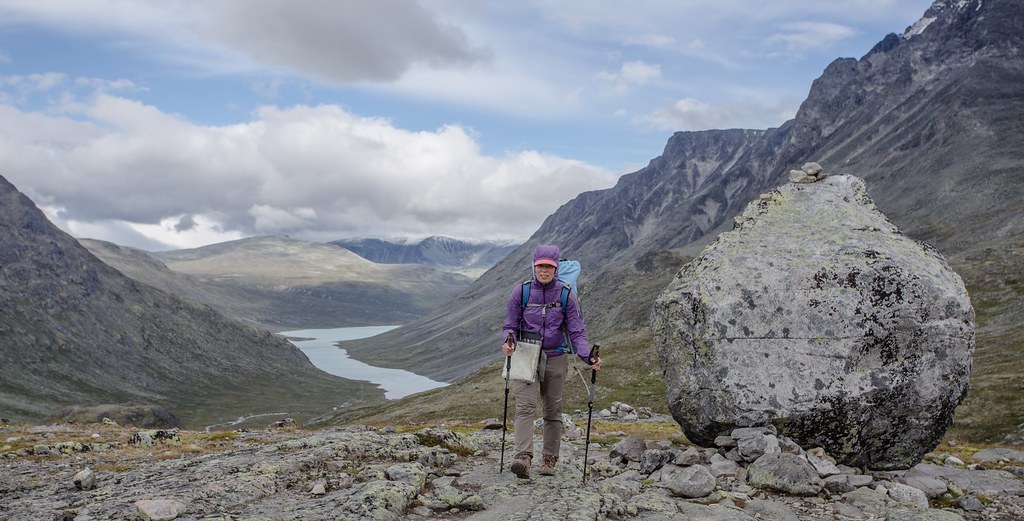
The walk over Besseggen ridge is one of the most popular mountain hikes in Norway. About 30,000 people walk this trip each year. From Besseggen there is a great view over azure Gjende (glacial) and dark Bessvatnet lake.
 
Jotunheimen NP. Norway.

Rocks rock!  Jotunheimen NP.
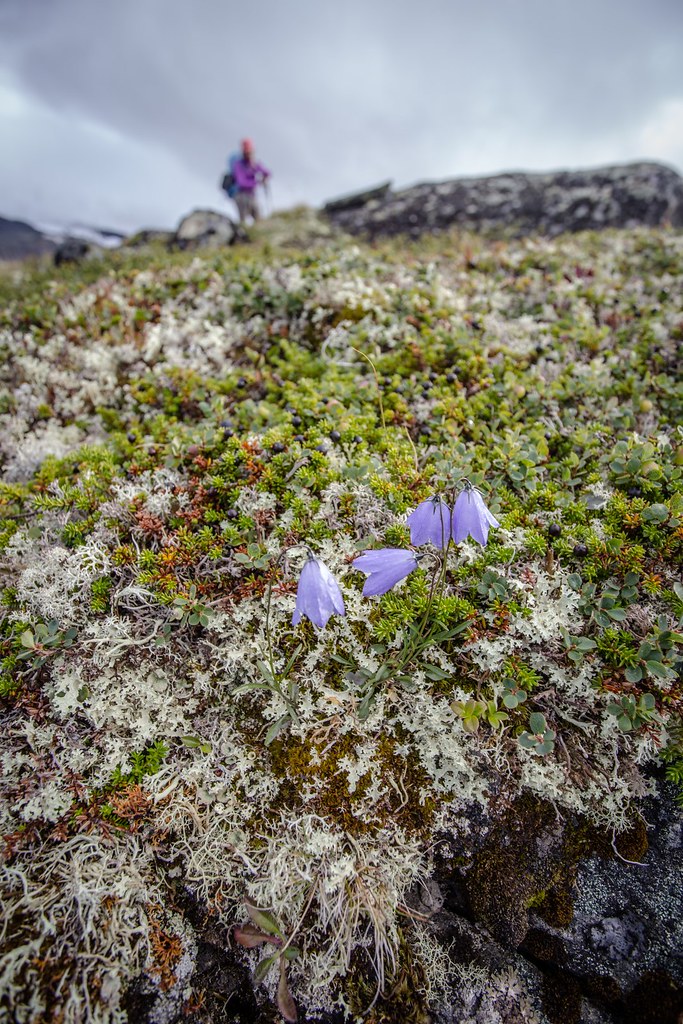
Rocks rock! Jotunheimen NP.

Harebell (Campanula rotundifolia). Jotunheimen NP.
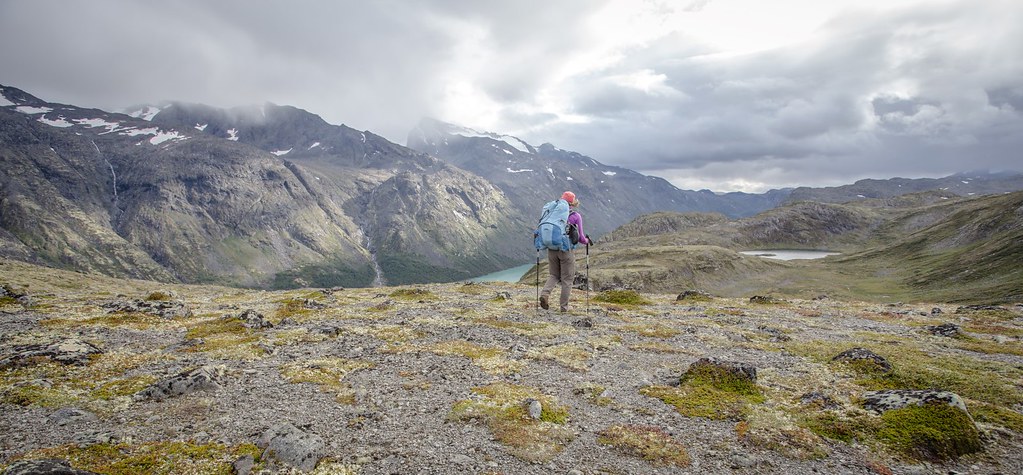
Harebell (Campanula rotundifolia). Jotunheimen NP.

We hike because why wouldn't we? Jotunheimen NP.

We hike because why wouldn’t we? Jotunheimen NP.
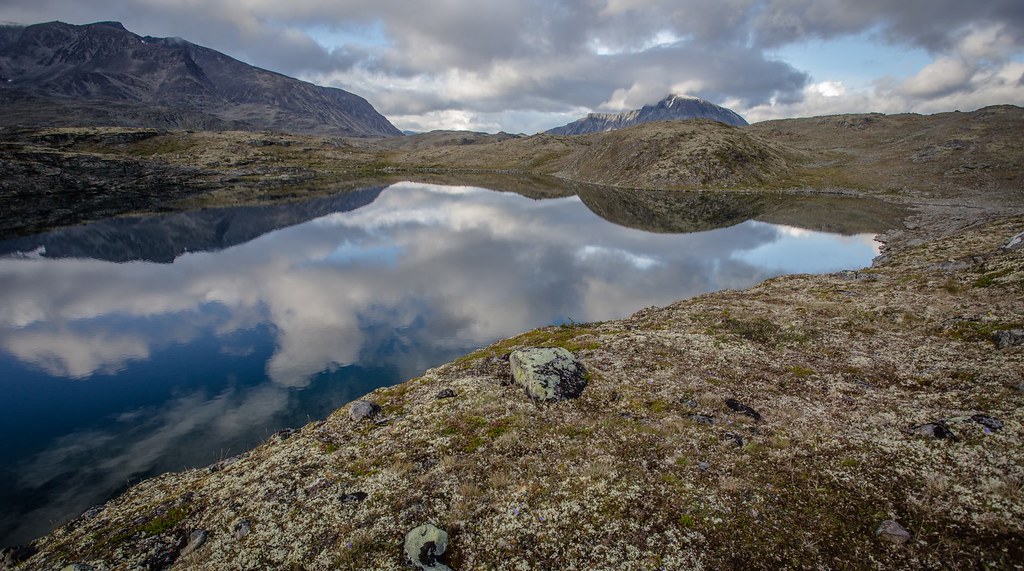
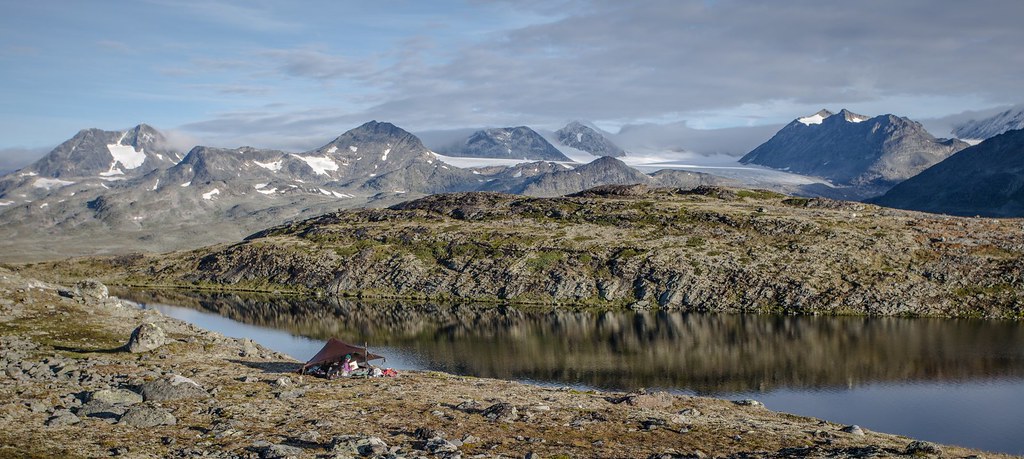
A painter's dream. Memerutunga. Jotunheimen NP.

A painter’s dream. Memerutunga. Jotunheimen NP.
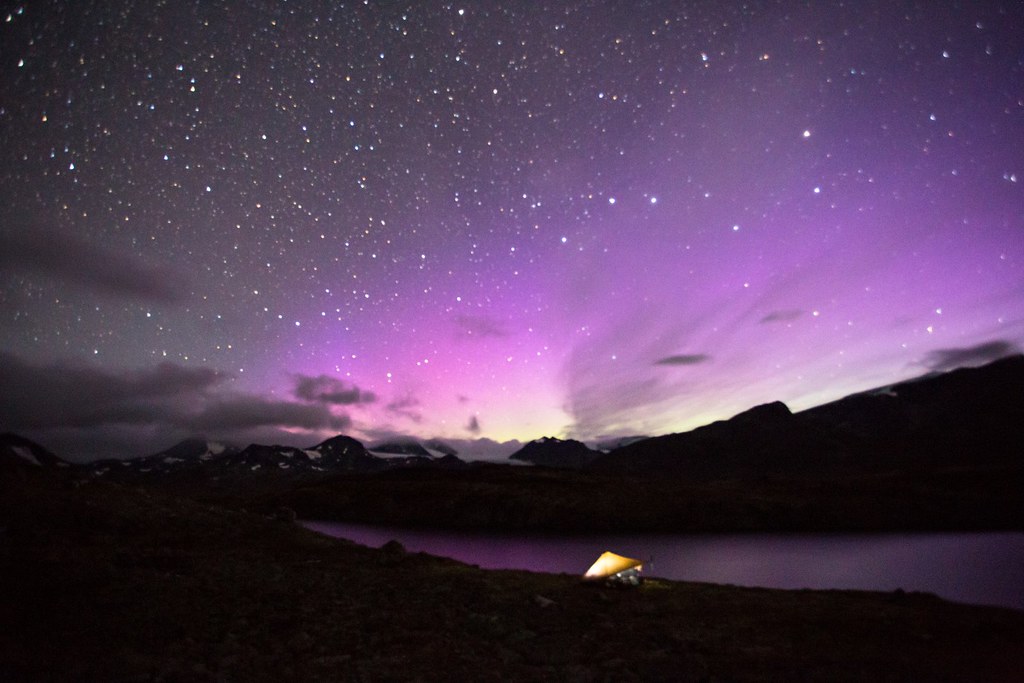
Flares from aurora borealis in the Norhern starsky. Memerutunga. Jotunheimen NP.
Flares from aurora borealis in the Norhern starsky. Memerutunga. Jotunheimen NP.

Nothing beats a coffee in the morning sun under the tarp. Memerutunga. Jotunheimen NP. Norway.
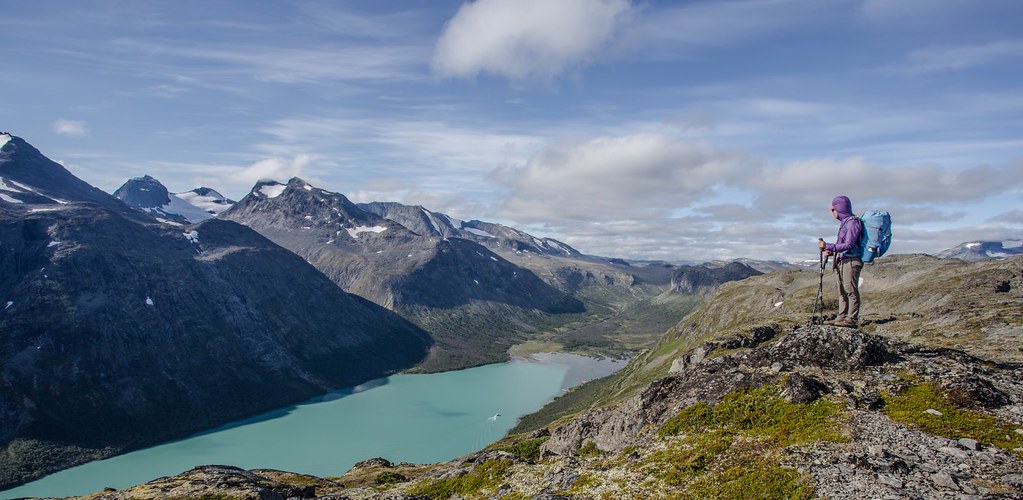
Nothing beats a coffee in the morning sun under the tarp. Memerutunga. Jotunheimen NP. Norway.

Gjendebu is the oldest cabin of the Norwegian Mountain Touring Association (DNT). The cabin lies 995 metres above sea level, by the western end of the lake Gjende, central in Jotunheimen. It is accessible by hiking along marked trails, or by boat over Gjende from Gjendesheim. The cabin was built in 1871 and was at that time 45 m² and with 12 beds, today there are 119 beds.
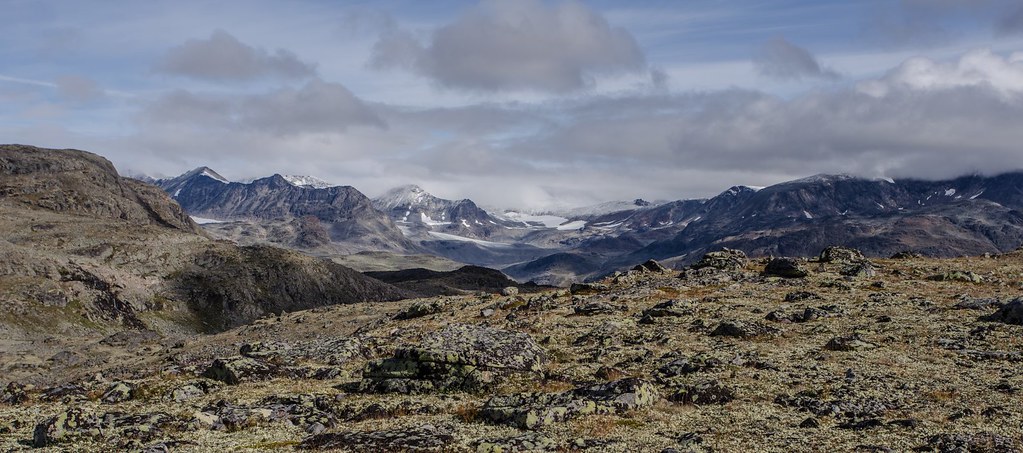
Gjendebu is the oldest cabin of the Norwegian Mountain Touring Association (DNT). The cabin lies 995 metres above sea level, by the western end of the lake Gjende, central in Jotunheimen. It is accessible by hiking along marked trails, or by boat over Gjende from Gjendesheim. The cabin was built in 1871 and was at that time 45 m² and with 12 beds, today there are 119 beds.

Memerutunga. Jotunheimen NP.
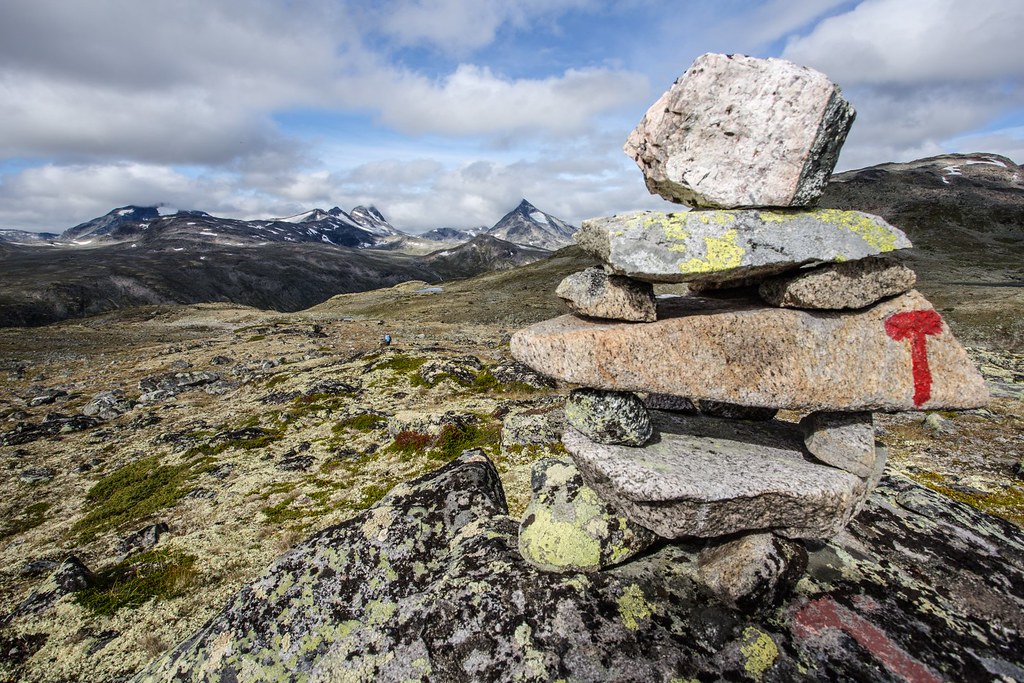
Memerutunga. Jotunheimen NP.

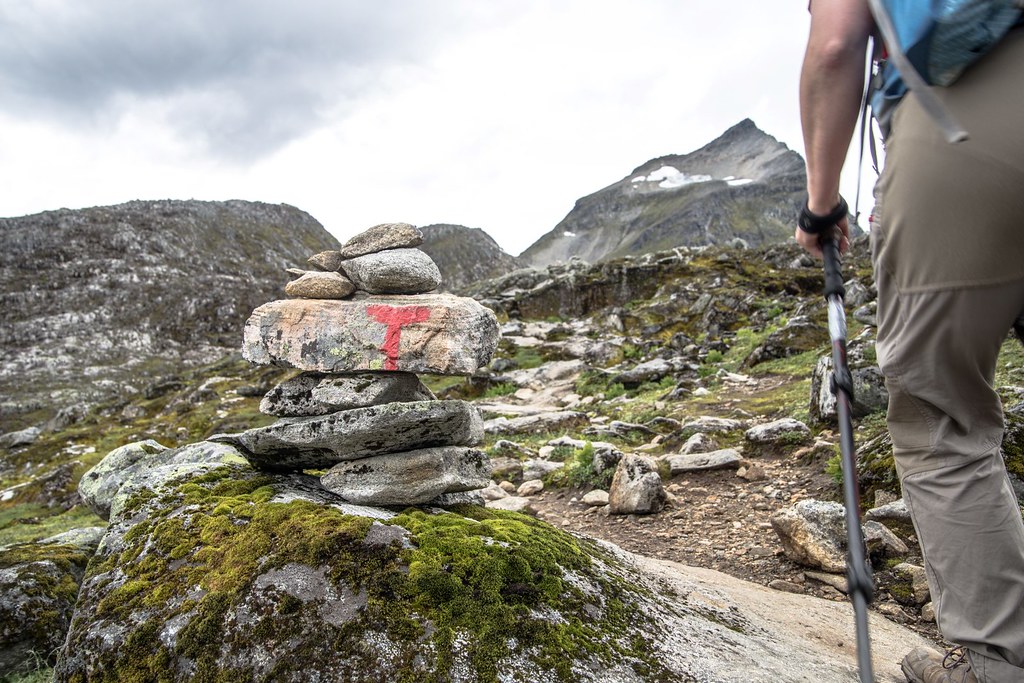
Around 400km of marked hiking trails and routes can be found in Jotunheimen. They are maintained by the Norwegian Trekking Association which marks cairns and rocks with the famous red T.
Around 400km of marked hiking trails and routes can be found in Jotunheimen. They are maintained by the Norwegian Trekking Association which marks cairns and rocks with the famous red T.

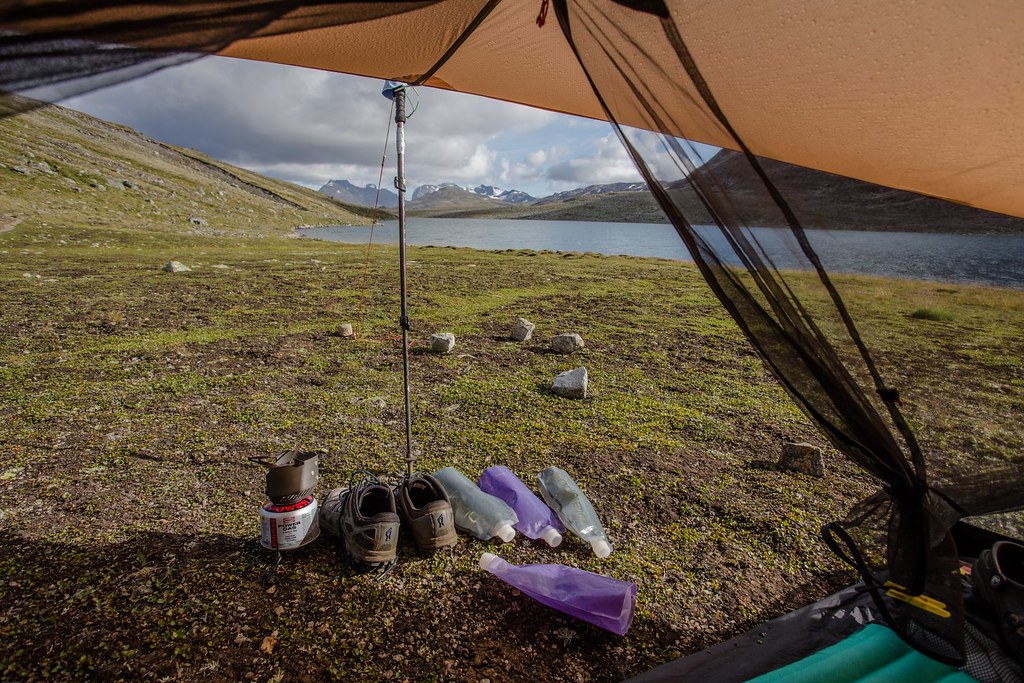
Room with a view. Langvatnet. Jotuheimen NP.

Room with a view. Langvatnet. Jotuheimen NP.

Urdadola runs into Langvatnet. Dusk. Jotunheimen NP.
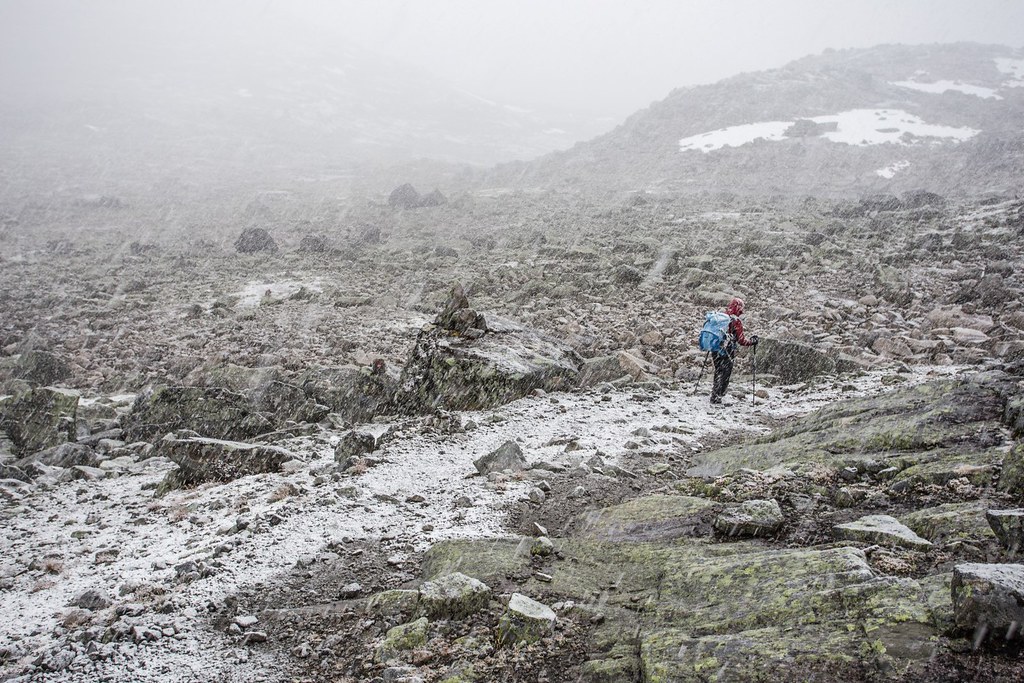
Urdadola runs into Langvatnet. Dusk. Jotunheimen NP.

Despite it's moderate altitude in comparison with other mountain ranges, northern latitude give Jotunheimen typical high alpine climate. Gulf stream bring lots of precipitation that is released especially on the western parts of Jotunheimen. Rapid weather changes are possible and winter conditions are not impossible even in the middle of summer. Jotunheimen NP.
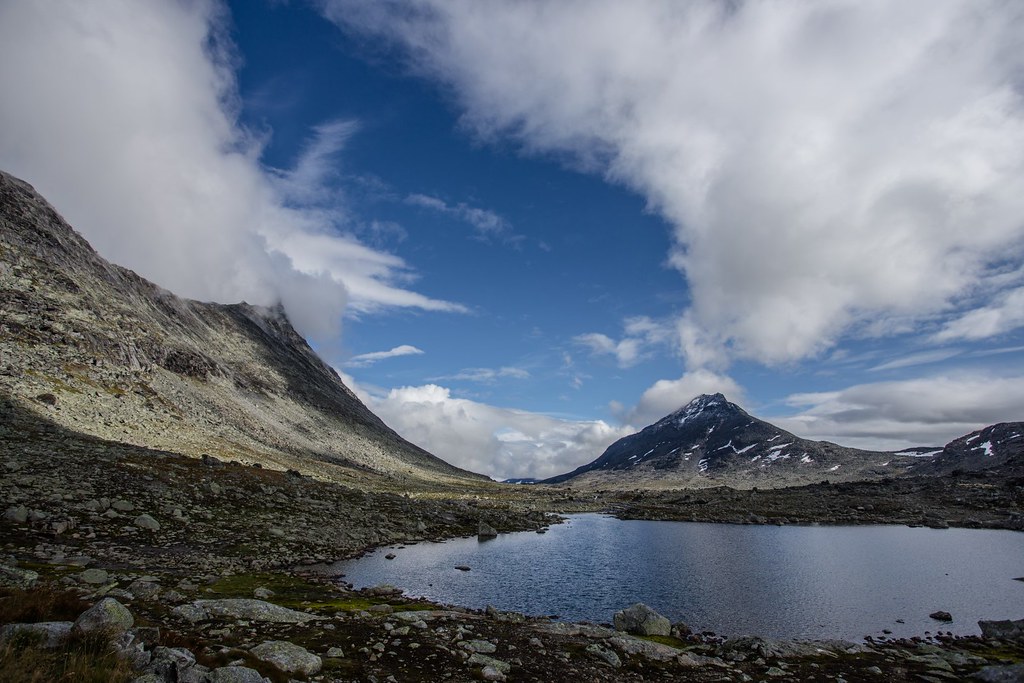
Despite it’s moderate altitude in comparison with other mountain ranges, northern latitude give Jotunheimen typical high alpine climate. Gulf stream bring lots of precipitation that is released especially on the western parts of Jotunheimen. Rapid weather changes are possible and winter conditions are not impossible even in the middle of summer.
 
Jotunheimen NP.

Snoholtinden as seen from Olavsbu, Jotunheimen NP.
Snoholtinden as seen from Olavsbu, Jotunheimen NP.

It's been a while since the last blogpost so thanks a lot for your patience.

It’s been a while since the last blogpost so thanks a lot for your patience.

We need to step out once in a while…

Just when I thought I was out…they pull me back in.M. Corleone

Back from the gap year. We have to adapt to our new but well-known environment. We observe. Everybody rushes. Ok, not everybody. Most of us. Ha! I’ll never ever be my former self again! I ain’t no fool! Not even 3 months later and it’s all down the gutter. We live a rat’s race. Face it. We’re sucked in again. Damn!

Mont Blanc massif as seen from Col d'Anterne (2257m). Haute-Savoie. France.

Mont Blanc massif as seen from Col d’Anterne (2257m). Haute-Savoie. France.

I knew we ran that race, but didn’t realize. I didn’t understand. Now I do. By taking distance it all became clear. I reckon. How important it is to step out once in a while. To breathe again. To take distance. To observ.

Following fresh Chamois footsteps into Réserve naturelle de Passy. Haute-Savoie. France.

Following fresh Chamois footsteps into Réserve naturelle de Passy. Haute-Savoie. France.

Last week of October. A last minute trip with little or no preperation. Time to let the beast set free. We bite a piece out of our oven fresh Pain au Chocolat while we gaze in the sun. The air crackles in the valley floor of Le Grand Massif. Kids on bikes in shirts and shorts race by. Autumn or even Winter is the last thing on our mind. We buckle up our backpack. Up it is. Into Réserve naturelle Sixt-Passy. It feels like summer has just began.

.

We had the vague idea of backpacking the tour des aiguilles rouges, with an aproach from Sixt-Fer-à-Cheval instead of the posh Chamonix. But as always we’re flexible.

 Shoulder season footwear. What works for us in snow when it's not extreme cold? Trailrunners, gore-tex socks, minimalistic gaiters and lightweight rain pants.

Shoulder season footwear. What works for us in snow when it’s not extreme cold? Trailrunners, gore-tex socks, minimalistic gaiters and lightweight rain pants.

A predicted cold front ruins indian summer on our first night. Change of route became inevitable. Costume switch. All white and foggy. It’s magic. We traverse in the snow towards the Anterne lake and it’s namesake col. Mountain extravaganza. The Mont Blanc massif plays hide and seek. We’re sucked in. This is my home. No rats here…

Alpine ibex. Réserve naturelle de Passy. Haute-Savoie. France.

Alpine ibex. Réserve naturelle de Passy. Haute-Savoie. France.

Snug in summer outfit. Réserve naturelle de Passy. Haute-Savoie. France.

Snug in summer outfit. Réserve naturelle de Passy. Haute-Savoie. France.

Sh*t with a view. Summit of Mont Blanc (4810m) visible from the pit toilet at Cabane de Willy. Réserve naturelle des Aguilles Rouges. Haute-Savoie. France.

Sh*t with a view. Summit of Mont Blanc (4810m) visible from the pit toilet at Cabane de Willy. Réserve naturelle des Aguilles Rouges. Haute-Savoie. France.

Melting in the sun. Off to Col du Brévent. Haute-Savoie. France.

Melting in the sun. Off to Col du Brévent. Haute-Savoie. France.

Aguille Verte (4122m). Massif du Mont Blanc. Haute-Savoie. France.

Aguille Verte (4122m). Massif du Mont Blanc. Haute-Savoie. France.

Ready for the freezer. Aguille du Tour (3529m), Aguille Verte (4122m) and Les Drus (3754m). Massif du Mont Blanc. Haute-Savoie. France.

Ready for the freezer. Aguille du Tour (3529m), Aguille Verte (4122m) and Les Drus (3754m). Massif du Mont Blanc. Haute-Savoie. France.

Alpenglow on Aguille Verte (4122m) and Les Drus (3754m). Massif du Mont Blanc. Haute-Savoie. France.

Alpenglow on Aguille Verte (4122m) and Les Drus (3754m). Massif du Mont Blanc. Haute-Savoie. France.

Le Lac Blanc. Aguille Verte (4122m),  Les Drus (3754m) and Les Grandes Jorasses (4208m). Massif du Mont Blanc. Haute-Savoie. France.

Le Lac Blanc. Aguille Verte (4122m), Les Drus (3754m) and Les Grandes Jorasses (4208m). Massif du Mont Blanc. Haute-Savoie. France.

Indian summer in the Réserve naturelle des Aiguilles Rouges. Glacier du Tour fills the horizon. Haute-Savoie. France.

Indian summer in the Réserve naturelle des Aiguilles Rouges. Glacier du Tour fills the horizon. Haute-Savoie. France.

 European larch turns the Alps into painter's dreams. Vallée de Chamonix. Haute-Savoie. France.

European larch turns the Alps into painter’s dreams. Vallée de Chamonix. Haute-Savoie. France.

Autumn glow. Icy Mont Blanc (4810m). Haute-Savoie. France.

Autumn glow. Icy Mont Blanc (4810m). Haute-Savoie. France.

Rochers des Fiz. Réserve naturelle Sixt-Fer-à-Cheval. Haute-Savoie. France.

Rochers des Fiz. Réserve naturelle Sixt-Fer-à-Cheval. Haute-Savoie. France.

Rock faces rock!

Rock faces rock!

Cascade de Sauffaz. Réserve naturelle Sixt-Fer-à-Cheval. Haute-Savoie. France.

Cascade de Sauffaz. Réserve naturelle Sixt-Fer-à-Cheval. Haute-Savoie. France.

Greenland – a look back

Summertime. Everybody’s out and we’re back from 13 months -euhm- wanderings! It’s the time of the year you’re overwhelmed with fantastic and truly inspiring trip reports. So when I opened my mailbox this morning, I was stunned by the video of Willem’s wild trip in Southern Greenland. In a snapshot I was reliving our trip to the wild and remote East coast of Greenland in 2011. Already looking forward to his trip report, I dug into my own collection of images of that trip and decided to share my report I wrote for the ever fantastic Sidetracked. Sad we didn’t have our packraft yet back then.

Flight aproach toward Kulusuk. Ice-strewn coast of East-Greenland.

Flight aproach toward Kulusuk. Ice-strewn coast of East-Greenland.

Kulusuk awakes on a cloudy July morning after a storm has blown all the coastal ice into the bay. It takes us 2 hours to cut the speedboat free out of the port.

Kulusuk awakes on a cloudy July morning after a storm has blown all the coastal ice into the bay. It takes us 2 hours to cut the speedboat free out of the port.

“Do not worry, it is very easy. You aim in direction of polar bear and just shoot in head or chest, and bear will go away or be dead”, laughs the Inuit hunter, while pushing a gun into our hands. He just dropped us at the head of the remote Tasiilaq Fjord. “See you in three weeks,” we cry, but the engine of his boat drowns the farewell. We’re 160 nautical miles from the nearest form of civilization.

Aproaching our drop-off at the head of Tasilap Kua fjord. East-Greenland.

Aproaching our drop-off at the head of Tasilap Kua fjord. East-Greenland.

The euphoria is great: pep talk and victory songs are chased by the wind into the fjord. The 4 of us are about to embark on a self-supporting wilderness cross-country thru-hike along the wild east coast of Greenland. The fjord transends into the huge glacial Tasilap Kua valley, which will lead us north in 3 days to the outer reaches of the iceberg-filled Sermilik fjord. The fjord is the last liquid boundary with the massive Greenland ice sheet, and marks the Arctic Circle. From the Sermilik Fjord we will hike southbound over 14 days back to where a warm shower awaits… hopefully.

The deserted U-shaped Tasilap Kua valley. Clouds hide all the tumbling glaciers feeding the milky river.

The deserted U-shaped Tasilap Kua valley. Clouds hide all the tumbling glaciers feeding the milky river.

Global warming is massively affecting the Inuit. Not only do the glaciers of the Greenlandic ice sheet melt at a hurlting speed, the annually increasing melting pack ice of the Arctic drifts southwards, bringing more polar bears into the region. Where these corners, during summer, used to be ”polar bear free”, in the last few years more and more polar bears are spotted in full summer along the fjords and around the Inuit villages. In Kulusuk, the village where we start our trek, we hear stories of polar bear incidents with expedition groups in recent weeks.

Crossing another glacial outlet. Tasilap Kua. East-Greenland.

Crossing another glacial outlet. Tasilap Kua. East-Greenland.

After 3 days in the clouds, it finally clears. Our target at the end of the Tasilap Kua apears. The mighty Sermilik fjord, marking the arctic circle.

After 3 days in the clouds, it finally clears. Our target at the end of the Tasilap Kua apears. The mighty Sermilik fjord, marking the arctic circle.

Sermilik fjord! East-Greenland.

Sermilik fjord! East-Greenland.

Our Inuit hunter gets us to haul a 4kg old Russian riffle. Luckily we can split it into 3 parts. There’s going to be straw drawing for the lucky rifle-free backpacker. Polar bears are easily sighted in this timberfree arctic tundra so we can give it a wide bend if necessary. No need for the rifle there. The danger lurks in at night. Mr. Fluffy could walk in camp and surprise us by night. A loaded gun lying next to you is your only chance of survival, according to Mr. Inuit.

Setting up camp after a tyring day to reach the head of Sermilik fjord. East-Greenland.

Setting up camp after a tyring day to reach the head of Sermilik fjord. East-Greenland.

Nighty night.

Nighty night.

Goooood moooooorning Greenland!

Goooood moooooorning Greenland!

Lightweight backpacking requires much preperation to keep the load as light as possible. Weeks of considering on necessary gear. Food rations are split into neat, small airless bags. During a logisitcs preparation meeting a couple of weeks before leaving, we we’re in heavy discussion on the the usefulness of a rifle in wild bear country. Hey, we have no experience in shooting or whatsoever. A gun would probably kill us earlier then a 1500 lbs bear would die from one of our bullets. I can see it happen. My wife going for a nightly pee, while me fighting through a polar bear encounter dream. Midnight. A sudden noise. Gun. Panic. Not paying attention that I am the only one left under the tarp. Bear. Load. Bang…

Another sunny day along Sermilik...

Another sunny day along Sermilik…

We arrive at the head of Tasilap Kua. Low clouds. A light drizzle. A small breeze. A wide open valley. A big grey river. Big azure blue glaciers touch the valley floor. They puke out flows of almost-freezing water. Did you bring neoprene socks for the wades? We have 7 days of food to reach the foodcache at the head of the Qinqertivaq Fjord. Feasible if the weather cooperates.

Tired from the view? Well...

Tired from the view? Well…

A couple of hours upstream our fear of meeting a polar bear is completely forgotten. We have millions of new friends. Crittering, zooming friends that must never have seen a human before. They attack. They sting. They suck our precious blood, leaving us with a burden skin. Headnets. Quick. An extra layer. Scratching our arms and neck. The mosquitos are ravenous. It must be their first blood for the summer. Arctic bugs. Huge mosquitos. No chance of spreading diseases here. Luckily.

It never gets dark in the arctic summer. A pink glow scatters the horizon all night long...

It never gets dark in the arctic summer. A pink glow scatters the horizon all night long…

It’s incredible how quickly we merge with our Arctic environment. Gone are all everyday worries, our rhythm is only determined by the essence: walking, eating, drinking, set up camp, sleep and, oh yes, glacial river wading.

Dusk in an icy fjord. Sermilik. East-Greenland.

Dusk in an icy fjord. Sermilik. East-Greenland.

Will you take that route? I think it’s better, easier walking over here. Look at the map, this will lead you onto the glaciar. Common, this is ridiculous, how can you make that up from such a large scale map. I walk over here. I go over there. We’ll see who’s right. Yeah, we’ll see about that, … Wiseacre.

Low tide. Let's walk along the coast of Sermilik.

Low tide. Let’s walk along the coast of Sermilik.

We laugh a lot. We howl simple songs and classic hits with new interpreted lyrics, about glaciers, mountains, ice, mosquitos, guns, alcohol and accumulated odors. A high pressure sets in, dissolving the ever low clouds. We reach a pass and look back, our first contact with the arctic sun. Hairs arising. Is that the valley we went through? Heavy clouds had lingered for days, obscuring any view of the glacier-laden peaks. The physical challenge offers spiritual liberation. Is this heaven? Is this religion? It’s passion, I tell you. Passion for the unexpected. A new emotion. Into the wild.

Climb up some slabs to bypass a rock band on the coast. Sermilik. East-Greenland.

Climb up some slabs to bypass a rock band on the coast. Sermilik. East-Greenland.

We look over the pass. Ice chunks in the distance. One final push for reaching Ningerti, the upper reaches of the monstrous Sermilik fjord. The sun sets, but doesn’t want to. This is the Arctic. It never gets dark in summer. Your body wants to go on forever, but somehow you feel it’s time to rest. It get’s colder. Good night. Zip. The warm goose down doesn’t dissappoint.

Tidal wave from ice berg collapse. Sermilik. East-Greenland.

Tidal wave from ice berg collapse. Sermilik. East-Greenland.

A heavenly beautiful sunday afternoon with the arctic sun high above. There are less mosquitos – probably because they don’t like the ice in the fjord. A seal pops up. He likes the ice – a tiny animal, free in this immense fjord, filled with ice bergs and ice sheets the size of Camp Nou. It’s low tide so we walk on the beach as if in a fairytale. We zigzag through house-high icebergs. Sun rays. Azure blue drops on the rocks. We stand and breathe, sunken in our thoughts. What thoughts? I have no thoughts. We smile. We stop. Jaws dropped. How can this be so beautiful?

Glacial milk depth testing...

Glacial milk depth testing…

How are the beaches in the Arctic? Rocky? Yep. Sandy? Yep. Don’t ever talk to me about about sandy again. We had enough of that. I hate quicksand!

Afternoon outing for picking up our foodcache.

Afternoon outing for picking up our foodcache.

The ice is silent. No wind and clear blue skies overhead. We climb higher, to bypass a rock band. Silence? A huge roar. What’s that? Look at Camp Nou! It’s breaking away! Backpacks go off. We run forward. Astoneshed must be the adjective for this. I have never used the F-word more in a 5 minute frame then on that Sunday afternoon in East-Greenland*. The rupture was one thing, but the overturn was massive. A 5m high tidal wave rammed into the coast that we were walking along half and hour previously. A gun would not have helped here. Our hearts were pounding, and it didn’t stop for over an hour. It took hours for the 10km wide fjord to calm down and forget about the Sunday afternoon ice horror.

Should I talk about the vast beauty of the landscape? I can’t. It’s indescribable. We must go back. At least to somewhere into the wide open. Where only the silence roars.

Our video is living its own life now on YouTube.

Another milky crossing.

Another milky crossing.

I'm sick of glacial river crossings!

I’m sick of glacial river crossings!

Have you chummed up with the mesa? Do you know its moods and changes? Then listen to the Wild — it’s calling you.  - The Call of the Wild by Robert W. Service

Have you camped upon the foothills, have you galloped o’er the ranges,
Have you roamed the arid sun-lands through and through?
Have you chummed up with the mesa? Do you know its moods and changes? Then listen to the Wild — it’s calling you.
– The Call of the Wild by Robert W. Service

Tiniteqilaaq. The only settlement we pass by in 3 weeks. Inuit live here year in and out. Summer the sun doesn't set. In winter auroras dance the sky.

Tiniteqilaaq. The only settlement we pass by in 3 weeks. Inuit live here year in and out. Summer the sun doesn’t set. In winter auroras dance the sky.

Glad to have you back. Tasiilaq. East-Greenland.

Glad to have you back. Tasiilaq. East-Greenland.

Well... to finish, we have another crossing.

Well… to finish, we have another crossing.

Time to cross them Atlantic again...

Time to cross them Atlantic again…

Colombia – que chévere es el cocuy

(how cool is el cocuy)

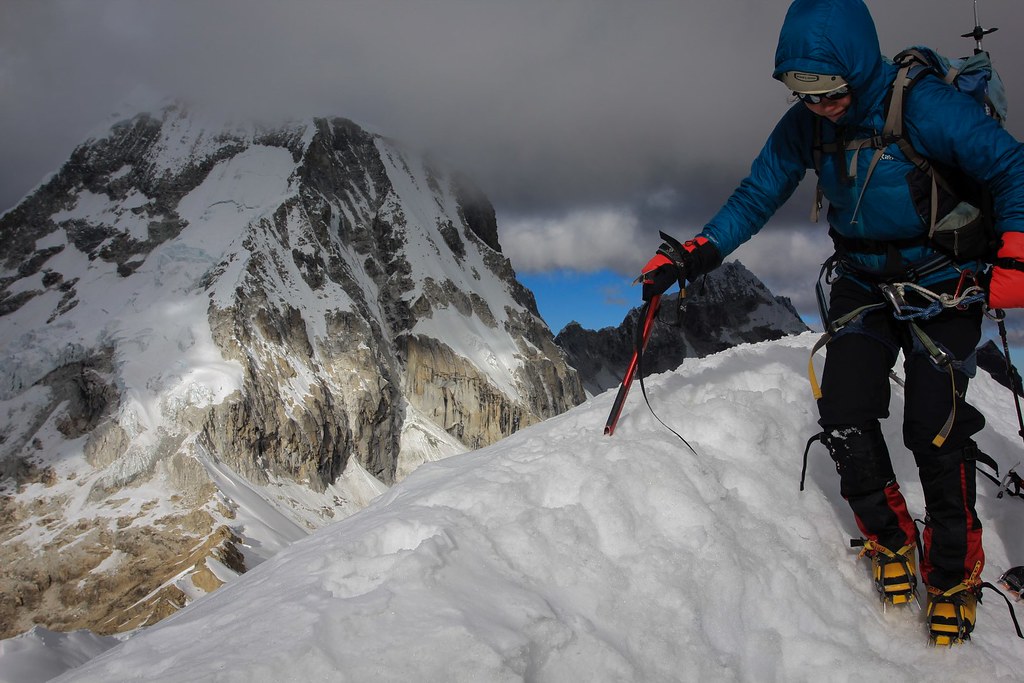
After 2 weeks of voluntary teaching computer skills in the Yurac Yacu community at the foot of the Cordillera Blanca, we went out for a couple of its summits. As reported before, the Cordillera isn’t enjoying its best climbing season, but nevertheless we managed to climb three 5000+ peaks. A report on that 10 day onslaught will apear after summer.

Starting the descent from the the summit of Nevado Ishinca (5530m) while Nevado Ranrapalca (6162m) touches cloud in the background. Huascaran National Park. Cordillera Blanca. North-Peru. A more detailed report from those escapades will follow in a future blog post.

Starting the descent from the the summit of Nevado Ishinca (5530m) while Nevado Ranrapalca (6162m) touches cloud in the background. Huascaran National Park. Cordillera Blanca. North-Peru. A more detailed report from those escapades will follow in a future blog post.

Flash forward to end of July. Time is ticking. Our gap year is closing in. Back in Colombia. The colonial town of el Cocuy, a former FARC guerrillas bastion, becomes our penultimate hideout on our south american rambles. Suposed to host Colombian’s finest Andean scenery in its nearby, namesake national park, we endure the arduous, tyring busride from Villa de Leyva to El Cocuy, just a stone throw away from the the Venezuelan border. 280km. 11 hours drive. You got the bumpy picture!

Café Bellavista. Locals in their traditional ruana, a poncho-style outer garment made of sheep wool. El Cocuy. Boyaca. Colombia.

Café Bellavista. Locals in their traditional ruana, a poncho-style outer garment made of sheep wool. El Cocuy. Boyaca. Colombia.

If Parque Nacional Natural el Cocuy would be part of the gringo trails in southern Peru or Ecuador, its sattelite town would host an incredible set of hostels, restaurants and the like to cater the hords of tourists. In el Cocuy, authenticity survives. It’s so tranquil we can’t believe this place was a no-go for foreigners up to a couple of years ago. Slowly some gringos arrive, but only in the supposed dry season from december to mid-february. Even now, amid European and American summer holidays, tourists are needles in a haystack.

“Buenas tardes. Que les vaya bien.” Altough everything looks so tranquil in the far away Andean town, heavy armed forces still patrol the streets, betraying Colombia’s recent troubled past. El Cocuy. Colombia.

Once again Colombian locals unfold as extremely friendly, helpful, talkative and hospitable. We immediatly got the hang of the place and choose to stay for more then backpacking its mountains. We introduce ourself in town as teachers and within half a day we organize a 10-day adult course in computer skills at the local library (equiped with some computers) which we will start after our trek. Within an hour, word spreads town and we have to close at 28 inscriptions. The local high school also invites us to help out in computer classes during our stay, so during daytime we’ll provide guest lectures to all grades.

After 48 hours of patiently waiting out horrendously, bad weather in the Sisuma hut, a clear morning finally gave us the oppurtunity to leave for the heart of the park. PNN El Cocuy. Colombia.

After 48 hours of patiently waiting out horrendously, bad weather in the Sisuma hut, a clear morning finally gave us the oppurtunity to leave for the heart of the park. PNN El Cocuy. Colombia.

Up and over slabs along the banks of Laguna de la Plaza. Parque Nacional Natural El Cocuy. Colombia.

Up and over slabs along the banks of Laguna de la Plaza. Parque Nacional Natural El Cocuy. Colombia.

Can we still be surprised by nature after a year of backpacking extravaganza in the world’s wildest corners? Little did we know Parque Nacional Natural el Cocuy would strike us with some much awe. Mountain forecast didn’t look promising when we left uphill, so after a first attempt to cross the first pass we had to stay put in a hut for 48 hours until the range’s notorious blizzard conditions cleared for a second attempt. We had to convince a party of 2 German-Austrian medics for not bailing and at least try to continue in these conditions, because their mountain guide wanted to bail after crossing 2 passes in way-too-much snow for his liking. Gird your backpack, lace your shoes and go take a hike with us on our our last trek of the gap year, through a remote mountainous area of glaciers, lakes and high altitude grassland lined with dramatic rock walls.

Frailejónes. An intruiging, endemic plant to this part of the Andes.

Frailejónes. An intruiging, endemic plant to this part of the Andes.

Close-up of our favourite Andean plant. Meet miss Fray Le Jónes! PNN EL Cocuy. Colombia.

Close-up of our favourite Andean plant. Meet miss Fray Le Jónes! PNN EL Cocuy. Colombia.

Fog crawls in from the Amazon. Frailejónes shape the fairytale scenery. PNN El Cocuy. Colombia.

Fog crawls in from the Amazon. Frailejónes shape the fairytale scenery. PNN El Cocuy. Colombia.

Laguna de la Plaza drains towards the Amazon through some nice waterfalls. PNN El Cocuy. Colombia.

Laguna de la Plaza drains towards the Amazon through some nice waterfalls. PNN El Cocuy. Colombia.

Pure, granite walls crawl out of the fog. PNN El Cocuy. Colombia.

Pure, granite walls crawl out of the fog. PNN El Cocuy. Colombia.

Lupines on the valley floor. Valle de los Cojines. PNN El Cocuy. Colombia.

Lupines on the valley floor. Valle de los Cojines. PNN El Cocuy. Colombia.

Bivy near Laguna Panuelo. PNN El Cocuy. Colombia.

Bivy near Laguna Panuelo. PNN El Cocuy. Colombia.

Crossing the snowy Paso el Castillo (4700m), until 10 years ago, this pass was glaciated. PNN El Cocuy. Colombia.

Crossing the snowy Paso el Castillo (4700m), until 10 years ago, this pass was glaciated. PNN El Cocuy. Colombia.

Crossing the marshes of Valle de los Cojines. PNN El Cocuy. Colombia.

Crossing the marshes of Valle de los Cojines. PNN El Cocuy. Colombia.

Flores de senecio near Paso de la Sierra (4650m) with the towering 1000m east-cliffs of Nevado Ritacuba Blanco (5410m). PNN El Cocuy. Colombia.

Flores de senecio near Paso de la Sierra (4650m) with the towering 1000m east-cliffs of Nevado Ritacuba Blanco (5410m). PNN El Cocuy. Colombia.

Descending towards Lago de la Isla. PNN El Cocuy. Colombia.

Descending towards Lago de la Isla. PNN El Cocuy. Colombia.

Local farmer on his way towards the Uwa indigenous reservate which overlaps with the national park. Colombia.

Local farmer on his way towards the Uwa indigenous reservate which overlaps with the national park. Colombia.

There’s an ongoing controversy for the moment between the national park authorities and the indigenous Uwa community which have overlap grounds with the park. The Uwa regard the core of the park as sacred ground and want to close it for foreigners. Let’s hope they find an outcome in this, because this would be a shame if this beautiful part of the world becomes inaccesbible.

Locals greeting us every morning on our way to high school. El Cocuy. Colombia.

Locals greeting us every morning on our way to high school. El Cocuy. Colombia.

El Cocuy's students at the local high school. El Cocuy. Colombia.

El Cocuy’s students at the local high school. El Cocuy. Colombia.

Teaching computer skills to local students. Guturiez high school. El Cocuy. Colombia.

Teaching computer skills to local students. Guturiez high school. El Cocuy. Colombia.

Time to shut the door on our gap year and start dreaming of new adventures...

Time to shut the door on our gap year and start dreaming of new adventures…

More picturefun in our online album.

End of the gap year? Waaaaaaaaaaaah! You must be kidding!

End of the gap year? Waaaaaaaaaaaah! You must be kidding!

Peru – Cordillera Blanca, un salto en el nube

[Cordillera Blanca, a jump in the cloud]

So here we are volunteering at the foot of the highest, tropical mountain range on the globe. Between preperations and the actual computer classes we got out for a two week solo trip in the remote and rugged northern part of the mesmerizing range. In for some Inca Kola?

The Yurac Yacu education centre (3650m) at the foot of the Cordillera Blanca. Our volunteering grounds of the last month. Nevado Churup (5493m) cliffs the sky.

The dry season seems not to get out of its hibernation this year. It’s cloudy, rainy and it doesn’t cool of in the night. Not even freezing at bivaouc spots at 4500m. With 2 early casualties in early season on Alpamayo, it promises not to be the Peruvian’s best Andean summer.

Flowering lupines at the foot of  Nevado Ulta (5875m). Huascaran National Park. Cordillera Blanca. Peru.

Flowering lupines at the foot of Nevado Ulta (5875m). Huascaran National Park. Cordillera Blanca. Peru.

We don’t know what it is up here, but every freakin’ gringo we meet in Huaraz is here for hiking the Santa Cruz trail. While it has it merits, there is so much more to explore, even on short overnight trips. So many empty valleys and forgotten ridges with uninterupted breathtaking views and the lone, friendly Quechua poppin’ up. It’s extreme diverse and easy to go backpacking in the Cordillera Blanca. You’ll be treated with the most incredible alpine scenery, rivaling anything in the Himalayas. Moreover, it’s so accessible, that you’re in the wild and among neck muscle defying peaks within an hour after sipping your coffee at one of the multiple, excellent hangouts in Huaraz. Stretching north along the Callejón de Huaylas you’ll find easy acces into the different west-east carving quebradas (deep carved valleys). Hey ho, let’s go!

I tried to put the trip report into another picture rollercoaster. Enjoy!

There is more picturefun in our flickr set over here.

Sidetracked magazine improved their website and has another article where we contribute. Go have a look!

There is not a single trail build for touristic purposes in the Cordillera Blanca. All of them are Inca or pre-Colombian era and were the only way to cross the range until a couple of decades. Here we are closing in towards Punta Yanayacu pass at 4850m.  Huascaran National Park. Cordillera Blanca. Peru.

There is not a single trail build for touristic purposes in the Cordillera Blanca. All of them are Inca or pre-Colombian era and were the only way to cross the range until a couple of decades. Here we are closing in towards Punta Yanayacu pass at 4850m. Huascaran National Park. Cordillera Blanca. Peru.

Seccluded biviaouc at 4200m in the Quebrada Matara. Sharp Nevado Ulta (5875m) and ridgy, glaciated Contrahierbas (6036m) rising high above the Quebrada Ulta. Huascaran National Park. Cordillera Blanca. Peru.

It is said that if one tears of a leaf of the Tarqoy flower, it will rain. Too much tearing thus, this year. Huascaran National Park. Cordillera Blanca. Peru.

It is said that if one tears of a leaf of the Tarqoy flower, it will rain. Too much tearing thus, this year. Huascaran National Park. Cordillera Blanca. Peru.

A continuous roar of avalanches spill from the cliffs of Contrahierbas (6036m). Deep down in the valley lies the Andean village of Yanama. Huascaran National Park. Cordillera Blanca. Peru.

A continuous roar of avalanches spill from the cliffs of Contrahierbas (6036m). Deep down in the valley lies the Andean village of Yanama. Huascaran National Park. Cordillera Blanca. Peru.

Leaving the Andean village of Yanama through farming lands towards the Quebrada Huaripampa. The acutal glaciated peaks are hidden in thick clouds, unusual for the time of the year.

Leaving the Andean village of Yanama through farming lands towards the Quebrada Huaripampa. The acutal glaciated peaks are hidden in thick clouds, unusual for the time of the year.

Massive deforestation left the Cordillera Blanca denuded before the range (above 4000m) was put in conservation  through the Huascaran National Park in 1975. Only some patches of the Queñua trees thrive in remote valleys and give the wanderer a feeling on how fairytale it must have been before mr. Human came along. Cordillera Blanca. Peru.

Massive deforestation left the Cordillera Blanca denuded before the range (above 4000m) was put in conservation through the Huascaran National Park in 1975. Only some patches of the Queñua trees thrive in remote valleys and give the wanderer a feeling on how fairytale it must have been before mr. Human came along. Cordillera Blanca. Peru.

Conservation, Peruvian style. Gringos pay 65 soles (25US$) National Park fee to the ranger (orange jacket), while locals are allowed to cut vulnerable trees just at the spot. Huascaran National Park. Cordillera Blanca. Peru.

Conservation, Peruvian style. Gringos pay 65 soles (25US$) National Park fee to the ranger (orange jacket), while locals are allowed to cut vulnerable trees just at the spot. Huascaran National Park. Cordillera Blanca. Peru.

Snapshot! Chacraraju (6112m) and Piramide (5885m) reveal for a 60-second marvel during breakfast. Quebrada Paria. Huascaran National Park. Cordillera Blanca. Peru.

Snapshot! Chacraraju (6112m) and Piramide (5885m) reveal for a 60-second marvel during breakfast. Quebrada Paria. Huascaran National Park. Cordillera Blanca. Peru.

Coming down from Alto de Pucaraju pass (4650m) with the east face of Taulliraju (5830m) touching cloud. Can you spot Katrijn? Huascaran National Park. Cordillera Blanca. Peru.

Coming down from Alto de Pucaraju pass (4650m) with the east face of Taulliraju (5830m) touching cloud. Can you spot Katrijn? Huascaran National Park. Cordillera Blanca. Peru.

Quechua people roasting a cow's head for supper purposes. Jancapampa. Cordillera Blanca. Peru.

Quechua people roasting a cow’s head for supper purposes. Jancapampa. Cordillera Blanca. Peru.

Crossing an unnamed ridge into the remote northern part of the Cordillera Blanca. The multipeak Pucajirca (6046m) absorbs all humidity from the Amazonas. Huascaran National Park. Cordillera Blanca. Peru.

Crossing an unnamed ridge into the remote northern part of the Cordillera Blanca. The multipeak Pucajirca (6046m) absorbs all humidity from the Amazonas. Huascaran National Park. Cordillera Blanca. Peru.

Another lonely bivaouc at Laguna Huecracocha, while the Andes awakes. How desolate these wild places are above 4000m, the flora cannot recover, because overgrazing is still a huge ecosystem corrupter, even after almost 40 years of conservation. Huascaran National Park. Cordillera Blanca. Peru.

Another lonely bivaouc at Laguna Huecracocha, while the Andes awakes. How desolate these wild places are above 4000m, the flora cannot recover, because overgrazing is still a huge ecosystem corrupter, even after almost 40 years of conservation. Huascaran National Park. Cordillera Blanca. Peru.

Leaving another lonely bivaouc spot at the foot of the north face of Pucajirca (6046m). Huascaran National Park. Cordillera Blanca. Peru.

Leaving another lonely bivaouc spot at the foot of the north face of Pucajirca (6046m). Huascaran National Park. Cordillera Blanca. Peru.

Alpine splendisism. Azure Laguna Jancarurish is fed by the massive glaciers of Alpamayo (5947m) and Quitaraju (6036m), both out of sight. Santa Cruz Grande (6241m) appears at the right. Huascaran National Park. Cordillera Blanca. Peru.

Alpine splendisism. Azure Laguna Jancarurish is fed by the massive glaciers of Alpamayo (5947m) and Quitaraju (6036m), both out of sight. Santa Cruz Grande (6241m) appears at the right. Huascaran National Park. Cordillera Blanca. Peru.

Alpenglow on the perfect pyramid north face of Alpamayo (5947m). The mountain was named “The Most Beautiful Mountain in the World” in 1966 after an international survey among climbers, mountaineers, exploreres and photographers. Huascaran National Park. Cordillera Blanca. Peru.

Laguna Cullicocha reflects the complete Santa Cruz (6241m) massif. Huascaran National Park. Cordillera Blanca. Peru.

Laguna Cullicocha reflects the complete Santa Cruz (6241m) massif. Huascaran National Park. Cordillera Blanca. Peru.

Bivaouc high above the Callejón de Huaylas. Sun sets over the Cordillera Negra, the Blanca's icefree parallel range to the west. Huascaran National Park. Cordillera Blanca. Peru.

Bivaouc high above the Callejón de Huaylas. Sun sets over the Cordillera Negra, the Blanca’s icefree parallel range to the west. Huascaran National Park. Cordillera Blanca. Peru.

Dropping down the Callejón de Huaylas towards the village of Hualcayan after spending a week above 4000m. The Cordillera Negra stretching out west. Huascaran National Park. Cordillera Blanca. Peru.

Dropping down the Callejón de Huaylas towards the village of Hualcayan after spending a week above 4000m. The Cordillera Negra stretching out west. Huascaran National Park. Cordillera Blanca. Peru.

Anyone who traveled in Peru surely tried the Inca Kola. The gummy ball flavored soft drink. Yummie! Caraz. Ancash, Peru.

Anyone who traveled in Peru surely tried the Inca Kola. The gummy ball flavored soft drink. Yummie! Caraz. Ancash, Peru.

Colourful Quechua women come down to the valley to sell their crops. Caraz. Ancash, Peru.

Colourful Quechua women come down to the valley to sell their crops. Caraz. Ancash, Peru.